Part IV Edmonton Zoning Bylaw
Bylaw 13852
February 3, 2005
To accommodate the comprehensive redevelopment of a former district shopping centre site into a mixed-use urban village with primarily residential uses complimented by commercial uses, in a pedestrian-friendly environment that supports higher intensity Transit Oriented Development at transit hubs.
This Provision shall apply to Lot 5A, Block 32, Plan 002 2925, a 17.4 ha parcel bounded by 111 Street on the west, 23 Avenue on the south and 109 Street on the east within the Ermineskin neighbourhood, as shown on Schedule A of this Bylaw, adopting this Provision.
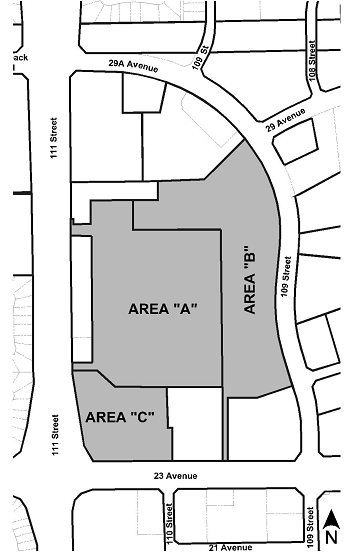
For general purposes the site area will consist of the following three areas, generally as shown in Figure 1:
Area A - residential and commercial mixed use development including low, mid, and high rise apartments and row housing and an office tower and amenity centre
Area B - row housing, low, mid, and high rise apartment buildings
Area C - street-oriented, low scale commercial buildings
Uses with access at grade level are shown in Figure 2 and uses above grade level are shown in Figure 3.
Figure 1 Sub-Areas
Figure 2 Uses With Access At Grade Level
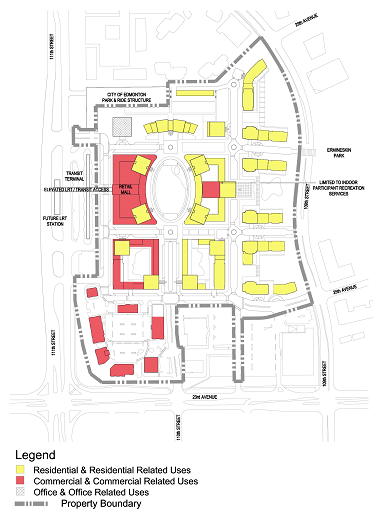
NOTE: The map only illustrates uses within buildings. Uses listed within this Provision may be permitted outside of buildings at the discretion of the Development Officer.
Figure 3 Uses Above Grade Level
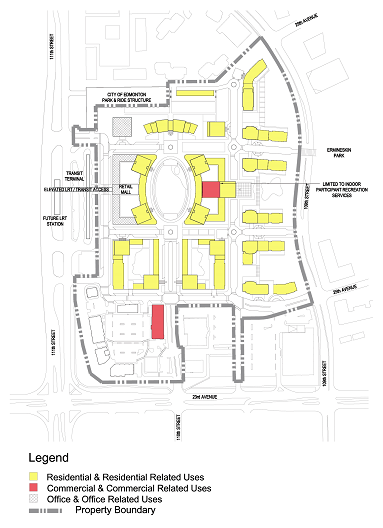
NOTE: The map only illustrates uses within buildings. Uses listed within this Provision may be permitted outside of buildings at the discretion of the Development Officer.
Apartment Hotels, limited to 1 tower
Apartment Housing
Boarding and Lodging Houses, for seniors housing only
Child Care Services
Extended Medical Treatment Services, limited to nursing homes
Major Home Based Businesses
Minor Home Based Businesses
Residential Sales Centre
Row Housing
Stacked Row Housing
Bars and Neighbourhood Pubs
Business Support Services
Child Care Services
Commercial Schools
Community Recreation Services
Convenience Retail Stores
Custom Manufacturing Establishments
Flea Market, limited to farmers market involving the sale of items such as local meats, produce and handicrafts
General Retail Stores
Government Services
Health Services
Household Repair Shops
Indoor Participant Recreation Services
Major and Minor Alcohol Sales
Major and Minor Amusement Establishments, as an accessory use to a restaurant
Major and Minor Secondhand Stores
Personal Service Shops
Private Clubs
Professional, Financial and Office Support Services
Public Libraries and Cultural Exhibits
Restaurants
Specialty Food Services
Spectator Entertainment Establishments
Business Support Services
Government Services
Health Services
Professional, Financial and Office Support Services
Private Education Services
Public Education Services
Public Libraries and Cultural Exhibits
Fascia On-premises Signs
Projecting On-premises Signs
Freestanding On-premises Signs, limited to project identification, building construction identification and real estate advertising signs of a limited duration
Apartment Housing
Boarding and Lodging Houses, for seniors housing only
Child Care Services
Extended Medical Treatment Services, limited to nursing homes
Major Home Based Businesses
Minor Home Based Businesses
Residential Sales Centre
Row Housing
Stacked Row Housing
Fascia On-premises Signs
Projecting On-premises Signs
Freestanding On-premises Signs, limited to project identification, building construction identification and real estate advertising signs of a limited duration
Automotive and Equipment Repair Shops
Bars and Neighbourhood Pubs
Broadcasting and Motion Picture Studios
Business Support Services
Child Care Services
Commercial Schools
Community Recreation Services
Convenience Retail Stores
Convenience Vehicle Rentals
Custom Manufacturing Establishments
Drive-in Food Services
General Retail Stores
Government Services
Health Services
Household Repair Shops
Indoor Participant Recreation Services
Major and Minor Alcohol Sales
Major and Minor Amusement Establishments, as an accessory use to a restaurant
Minor Service Stations
Personal Service Shops
Private Clubs
Private Education Services
Professional, Financial and Office Support Services, including drive-through banks
Public Education Services
Rapid Drive Through Vehicle Services
Residential Sales Centre
aa. Restaurants
bb. Specialty Food Services
cc. Veterinary Services
dd. Fascia On-premises Signs
ee. Freestanding On-premises Signs
ff. Projecting On-premises Signs
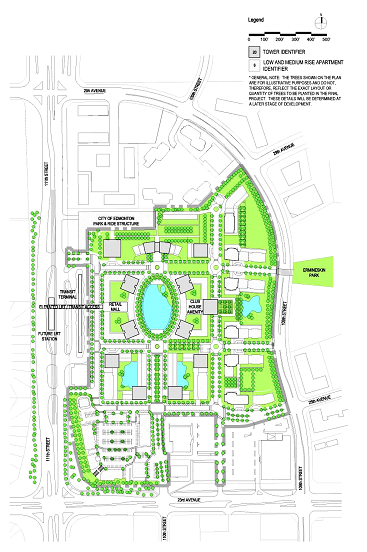
In order to achieve the General Purpose of this Direct Control Provision, objectives and related design guidelines for the comprehensive development of the entire site are provided, in addition to development regulations. The Development Officer shall have regard for these objectives and design guidelines in order to ensure that development is compact, transit-oriented, of a high quality and integrates with surrounding neighbourhoods. The illustrative site plan is shown in Appendix I. Notwithstanding any of these objectives or design guidelines, the Development Regulations and the Appendices to this Provision shall take precedence.
Ensure that buildings and streetscapes are of a high quality design.
Ensure that high rise buildings have relatively small floor plates to allow for increased ground level open space, maintain view corridors, and mitigate adverse microclimatic effects.
Maximize solar penetration and avoid adverse microclimatic effects related to wind and shadowing on and off-site.
Enliven the street by providing attractive streetscaping, active storefronts, and multiple doorways and windows.
Ensure that the tallest high rise buildings are treated as signature buildings with distinctive architecture.
1. Building Height and Massing
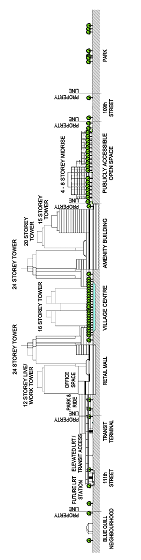
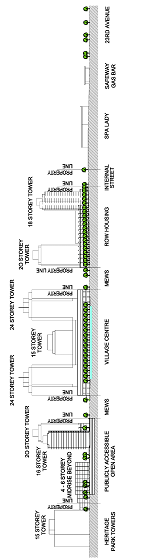
The development should provide a transition in building height and massing in relation to the surrounding neighbourhoods as generally illustrated in Figure 4 West- East and North-South Site Sections.
The taller buildings should be located near the centre of the site.
Floor plates of high rise buildings should be relatively small to allow for increased ground level open space, maintain view corridors and reduce adverse microclimatic effects.
Buildings should be sited in such a way as to maximize solar penetration and to avoid adverse microclimatic effects on and off site related to wind and shadowing.
Perceived height and massing should be minimized through such things as building setback variations at the upper levels, building orientation, roof treatment, and the choice of exterior materials and colours.
2. Architectural Treatment of Buildings
All building façades should use compatible and harmonious exterior finishing materials.
Building colors should provide visual interest.
Mechanical equipment on the roof of any building should be concealed by incorporating it within the building roof, or by screening it in a way that is consistent with the character and finishing of the building.
High rise signature buildings should have distinctive architecture that includes sculpted tops.
The design at rooftops visible from higher buildings should be carefully considered. Where feasible, rooftop gardens and patios should be provided to improve rooftop aesthetics and provide additional amenity space.
Dwellings and other elements of the development should be sited and oriented to minimize their impact on other dwellings, considering such things as daylight, sunlight, ventilation, quiet, visual privacy and views.
Figure 4 West-East and North-South Sections
|
|
|
|
|
|
|
 |
|
 |
3. Building Relationship to the Street
To provide active and inviting streetscapes at ground level, buildings should feature doorways, porches and windows at ground level, as well as weather protection features such as awnings, canopies and arcades, as shown in Figure 5.
Larger buildings with long street fronts should be designed with detail and articulation to create an attractive streetscape.
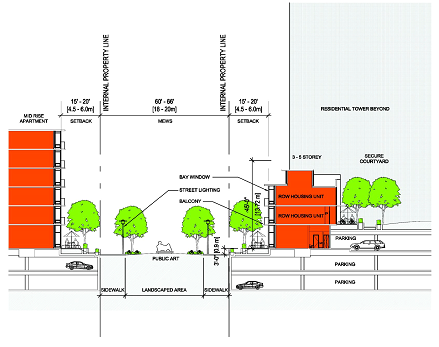
Blank walls should be avoided by wrapping active retail or residential uses around above-grade parking structures to maintain an active and attractive streetscape, as shown in Figure 6.
Residential high rise buildings should generally be integrated with row housing, stacked row housing, or low to mid rise apartments to provide a human-scaled streetwall.
The office high rise building should be designed to provide an inviting street presence and attractive building façades facing the street.
Figure 5 Active Residential and Commercial Streetscapes
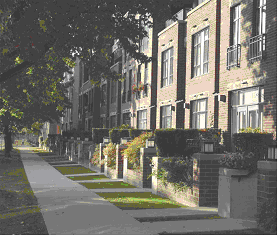
Active residential streetscape
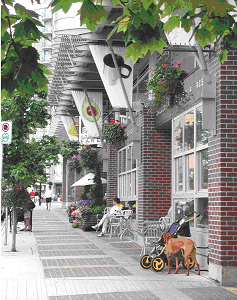
Active commercial streetscape
Figure 6 - Section Through Mews
Provide a safe and pleasing pedestrian environment that encourages walking.
Create strong linkages within the site and connecting the site to City transit facilities, parks and other community amenities, and to surrounding communities.
Provide a variety of open spaces and amenity areas.
Ensure that many of the open spaces are accessible to people who do not live or work on the site.
Ensure high quality open space design and landscaping.
Minimize the ground surface area necessary for vehicular circulation, access and parking in order to increase the area devoted to open spaces and amenities.
1. Pedestrian Circulation
Safe and attractive pedestrian linkages should be provided between various land uses within the site, surrounding neighbourhoods and transit facilities.
The internal street system and pedestrian linkages should foster connectivity from various parts of the site and surrounding neighbourhoods to the transit terminal and future LRT station.
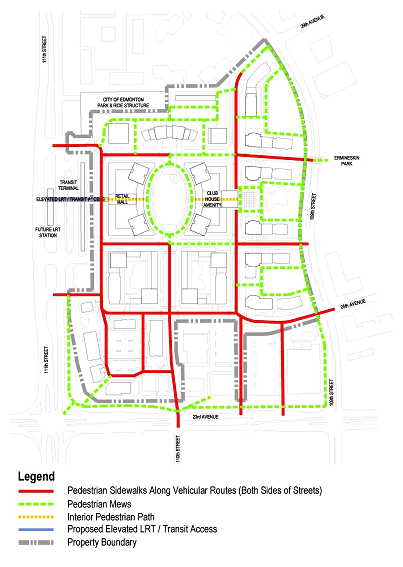
Pedestrian linkages should include both pedestrian mews access limited to emergency and service vehicles only and sidewalks included as part of the road right-of-ways
Crime Prevention Through Environmental Design should be considered in the design of open spaces. Pedestrian spaces should be well lit at night and the gridded street pattern should avoid dead ends.
2. Open Space
Development should include a variety of open spaces such as plazas, courtyards, pedestrian mews, greens and community gardens.
Secure interior courtyards should serve as focal points for residents of a series of buildings.
Open spaces should feature high quality landscape architecture intended to make them comfortable and enjoyable, including such features as trees, abundant street furniture, public art and water features. Public art must be provided to a value equal to $6.46 per square meter (approximately sixty cents per square foot) of Gross Floor Area and the selection process should favour Edmonton or Alberta artists.
Site entrances and edges should receive special design attention to help ensure that the development presents an attractive and inviting face to surrounding areas.
Internal streets should have tree-lined boulevards and should be lit at night with pedestrian-level lighting.
Open spaces and parking areas should be designed to discourage criminal activity.
Open spaces should be designed with consideration to winter city design principles.
Provide a high degree of connectivity within the site and between it, transit facilities and surrounding areas.
Provide a safe and pleasing pedestrian environment that encourages walking.
Design the site to be conducive to movement by bicycle.
Provide effective access and egress for automobiles and service and emergency response vehicles.
Provide parking necessary for a transit-oriented development and an adjacent low-scale commercial area.
1. Roadways and Parking
Traffic calming measures and pedestrian mews (access limited to service and emergency vehicles only) should be provided in the design to create a safe and attractive pedestrian environment.
Streets should be designed to accommodate bicycles and bicycle parking should be abundant.
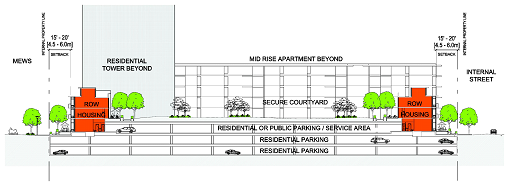
The majority of parking should be provided in underground and concealed above grade parking structures providing for a more attractive pedestrian and living environment and reducing pedestrian / vehicle conflicts. See Figure 7 - Section of Parking Structure.
Some short-term surface parking should be provided on internal streets and in Area C to serve commercial uses.
Where possible, parking should be shared by users with staggered peak hours of demand.
Service and emergency response vehicles should have clear and effective access to the buildings on the site.
Parking, loading and passenger drop-off areas should be easily accessible and designed to minimize pedestrian-vehicle conflicts.
Potential traffic impacts on adjacent roadways resulting from the development should be mitigated.
Figure 7 - Section of Parking Structure
2. Integration with Transit
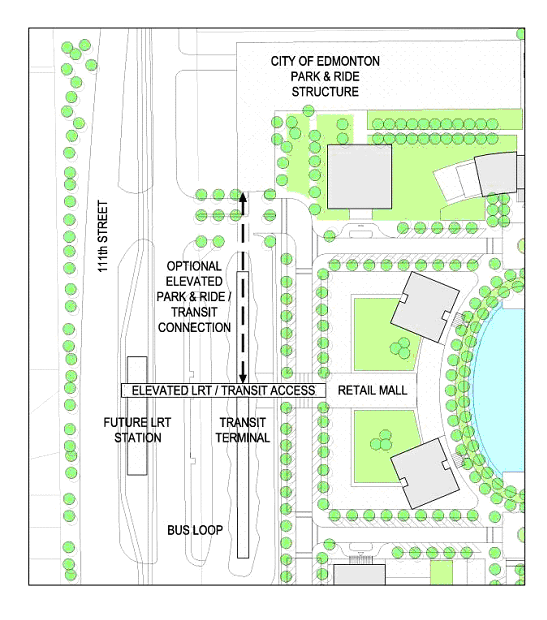
Potential integration of the development to the future LRT station is illustrated in Figure 8.
Clearly defined and attractive pedestrian connections should be provided between various parts of the development and adjacent neighbourhoods to provide safe and attractive access to the existing transit stops.
Consideration should be given to exploring opportunities to share or integrate parking between the City's proposed Park N Ride Facility and on site parking
Enhanced pedestrian linkages should be provided between various parts of the site, the LRT station and the City's proposed Park N Ride facility.
Consideration should be given to providing adequate separation space and landscaping between the Park N Ride facility and adjacent residential areas.
Figure 8 - Potential Connection to Future LRT Station
Consider sustainable development principles in the planning and design of the development.
Contribute to a socially sustainable community by providing housing for a range of household types, ages and physical abilities.
Design the site to facilitate walking, cycling and transit use.
The site should be a walkable mixed-use development with opportunities to live, work, shop and recreate.
A mix of housing types should be provided on the site, including row houses; stacked row houses; and low, mid and high-rise apartments.
Universally accessible design should be considered in the architecture of buildings and the design of open spaces.
Where possible, buildings should be designed to include on-site alternative energy sources such as solar heat, solar electricity and geothermal energy.
The incorporation of features such as daylighting, recycling, reuse of water, low-water landscaping and energy-efficient lighting and other devices should be considered in building and site designs to reduce the consumption of energy and materials.
On-site infiltration of stormwater should be considered in the design of open spaces.
To encourage alternatives to the automobile, the development should be walkable, conducive to bicycles and integrated with transit facilities. Locations for car-sharing vehicles should be planned for residential parking facilities.
The Site development shall be in general accordance with the Illustrative Site Plan attached as Appendix I. The Development Officer may allow for minor variance in location of individual buildings provided that consideration has been given to the objectives and design guidelines of this Provision and to visual, shadowing, and other microclimatic impacts on adjacent residential development and provided that the overall permitted Density and Height set out in this Provision are not exceeded.
The maximum Floor Area Ratio for the site as a whole shall be 1.75. The maximum Floor Area Ratios for each sub-area are specified in Table 1.
Table 1: Density by Area
|
Area |
Site Area ha |
Site Area m2 |
Building Area m2 |
Floor Area Ratio |
|
A |
8.01 |
80,100 |
189,475 |
2.37 |
|
B |
6.88 |
68,800 |
108,000 |
1.57 |
|
C |
2.52 |
25,200 |
7,200 |
0.29 |
|
Total |
17.41 |
174,100 |
304,675 |
1.75 |
The maximum building area for commercial and commercial related uses in Area A shall not exceed 13,000 m2. The maximum building area for office and office related uses in Area A shall not exceed 18,900 m2.
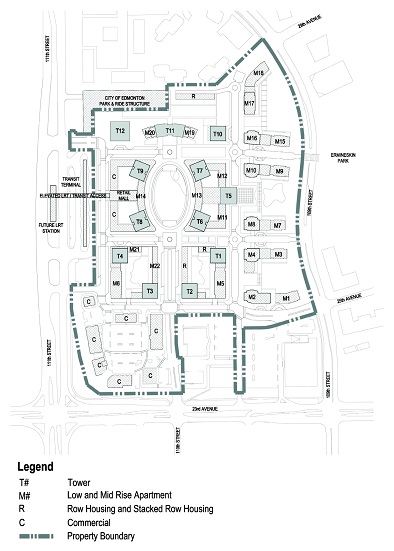
The maximum Building Height and floor plate area for high rise apartment buildings is specified in Table 2. The maximum Building Height for low and mid rise apartments is specified in Table 3. The locations of towers and mid and low rise residential buildings are identified in Appendix II.
Table 2: Maximum Height and Floor Plate Area of High Rise Buildings
|
Tower No. |
Max. No. of Floors |
Max. Tower Height (m) |
Max. Floor Plate Area (m2) |
|
T1 |
20 |
69 |
700 |
|
T2 |
18 |
63 |
700 |
|
T3 |
18 |
63 |
700 |
|
T4 |
20 |
69 |
700 |
|
T5 |
15 |
54 |
600 |
|
T6 |
24 |
81 |
790 |
|
T7 |
24 |
81 |
790 |
|
T8 |
24 |
81 |
790 |
|
T9 |
24 |
81 |
790 |
|
T10 |
20 |
69 |
700 |
|
T11 |
16 |
57 |
1030 |
|
T12 |
15 |
69 |
930 |
NOTE: Floor plate area relates to the tower zone as illustrated in Figure 9 and includes enclosed balconies, mechanical and electrical areas, storage, elevator cores and stairs.
Table 3: Maximum Building Height for Low and Mid Rise Apartments
|
Apartment No. |
Max. No. of Floors |
Max. Apartment Height (m) |
|
M1 |
4 |
17 |
|
M2 |
8 |
29 |
|
M3 |
4 |
17 |
|
M4 |
8 |
29 |
|
M5 |
6 |
23 |
|
M6 |
4 |
20 |
|
M7 |
4 |
17 |
|
M8 |
8 |
29 |
|
M9 |
4 |
17 |
|
M10 |
8 |
29 |
|
M11 |
6 |
23 |
|
M12 |
6 |
23 |
|
M13 |
6 |
23 |
|
M14 |
6 |
26 |
|
M15 |
4 |
17 |
|
M16 |
8 |
29 |
|
M17 |
6 |
23 |
|
M18 |
4 |
17 |
|
M19 |
8 |
29 |
|
M20 |
8 |
29 |
|
M21 |
5 |
19 |
|
M22 |
5 |
19 |
The maximum Building Height for Row Housing and Stacked Row Housing shall not exceed 5 Storeys or 15 m, where the 5th Storey provides a roof-top terrace.
The maximum Building Height for Commercial buildings as identified in Appendix II shall not exceed 4 Storeys or 19 m.
A maximum of 2,886 Dwellings is permitted.
Residential towers should be comprised of three distinct vertical zones: tower base, tower, and tower top, as illustrated in Figure 9. The distinct nature of the three vertical zones should be created both through Setbacks and stepbacks in the building mass, and through the architectural treatment of the façades, as follows:
Tower Base Zone
The tower base zone shall be 4 to 6 Storeys in height and should define street and open space edges. On the sides of the building facing outward onto internal streets, there shall generally be a minimum 3 m stepback in building mass at the top of the tower base zone to create a strong horizontal expression.
Tower Zone
The tower zone shall generally be differentiated from the tower base zone through the use of a different architectural style and articulation of the façade and building mass, but should reinforce some of the design details, materials, and architectural expression from the architecture below. While there should be similarity in materials to create a cohesive building, a variety in architectural styles should be encouraged. Floor plates in the tower zone shall not exceed limits identified in Table 2.
Tower Top Zone
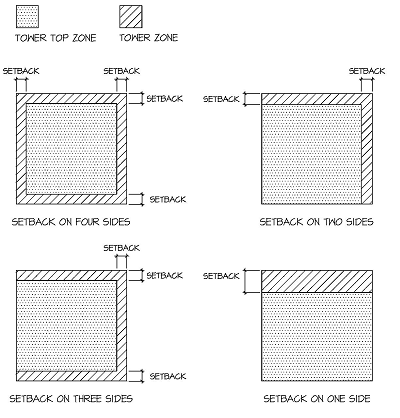
The tower top zone shall be 2 to 4 Storeys in height. Generally, the tower top zone should noticeably stepback from the tower zone to create a distinctly different top to the tower. This stepback should be such that the area of floor plates in the tower top zone is 10% smaller than the area of floor plates in the tower zone below.
A change in materials or architectural detailing can be used to emphasize the tower top zone as a special and distinct zone. This treatment should not, however, be of such visual strength or unusual form to dominate the architecture of the building.
Stepbacks in the building mass can occur on one, two, three, or all of the building façades (as illustrated in Figure 10), but should generally stepback on those façades adjacent to streets and open spaces where there will be pedestrian traffic.
Figure 9 Tower Zones
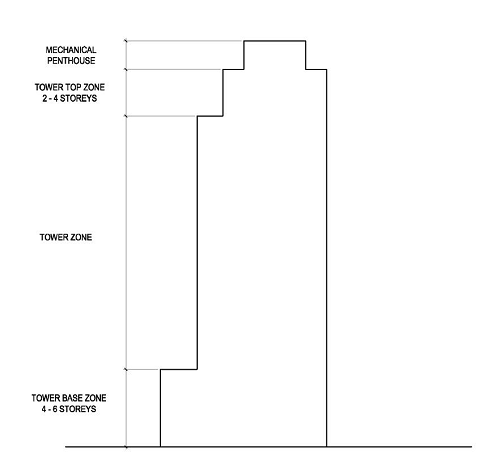
Figure 10 Plan Diagrams Showing Tower Top Zone Stepback Options
The finishing material for all development shall be of high quality, consisting of glass and glazed window wall systems, brick, stone, architectural concrete, pre-cast coloured concrete, stucco panels (to a maximum of 15% of the buildings exterior surface areas), or pre-finished metal.
Mechanical equipment on the roof of any building shall be concealed by incorporating it within the building roof, or by screening it in a way that is consistent with the character and finishing of the building.
Minimum building Setbacks from the edge of the Site and the edge of the internal road rights-of way shall be as shown in Appendix III.
As a condition of issuing a development permit for a Major Home Based Business the Development Officer may impose any condition that will help to ensure that the residential character of the development is maintained including, but not limited to the following:
Conditions limiting the types of business that may be conducted under the permit;
Conditions limiting the number of business visits per day;
Conditions limiting the number of business visitors at any one time;
Conditions limiting the hours or days of operation of the business;
Conditions prescribing the manner of operation of the business that are intended to reduce noise or other off-site impacts; and
Conditions limiting the location, within the Dwelling, where the business may be conducted.
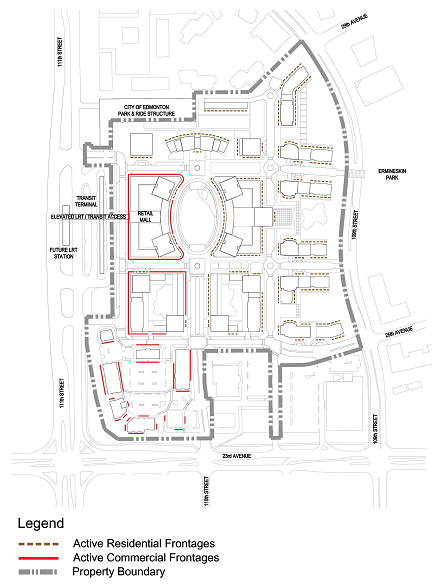
Active commercial frontages as shown in Appendix IV shall be developed with regard to Section 4.1 of this Direct Control Provision and according to the following regulations:
There shall be outward facing building entrances, and windows in addition to any openings onto internal courtyards or parking areas;
At least 50% of ground floor building façades shall be glazed to the exterior, except ground floor building façades facing the west, east and south perimeters of Area C which shall have at least 20% glazing;
Horizontal stretches of uninterrupted façade shall not exceed 12 m in length; and
At least 50% of the ground floor commercial premises in Area A shall consist of individual shops of not more than 12 m frontage.
Parking and circulation areas within and surrounding Area C shall be developed with regard to Section 4.3 of this Direct Control Provision and according to the following regulations:
The layout of parking areas shall specifically address the interrelation of pedestrian, vehicular and bicycle circulation in order to provide continuous, direct pedestrian access with a minimum of driveway and drive aisle crossings. Remedial treatments such as raised pedestrian crossings, forecourts and landings, special paving, lights and bollards shall be provided at significant points of conflict;
Landscaped islands with raised curbs shall be used to define parking lot entrances, the ends of all parking aisles and the location and pattern of primary internal access drives, and to provide pedestrian refuge areas and walkways; and
Internal streets to the north and east of Areas C shall have numerous safe pedestrian crossings to Area C where dictated by expected pedestrian traffic.
Active residential frontages as shown in Appendix IV shall be developed with regard to Section 4.1 of this Direct Control Provision and feature ground level units with individual external accesses and terraces or other landscaped open space, and common residential entrances.
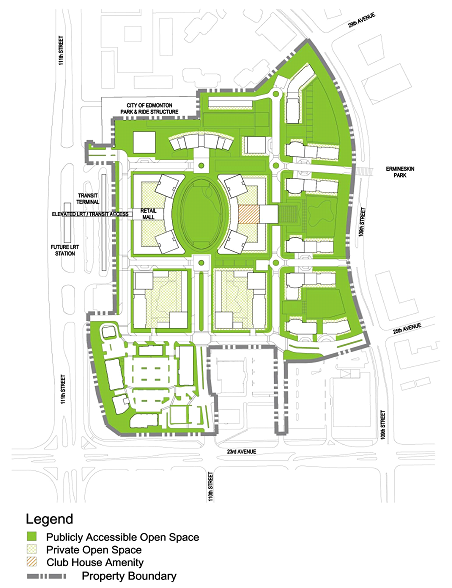
Open space shall be provided with regard to Section 4.2 of this Direct Control Provision and in general accordance with Appendix V. The estimated amount of open space to be provided is summarized in Table 4. In addition to this open space, additional recreational space will be provided within an estimated 2,300 m2 facility for Indoor Participant Recreation Services (identified as Club House Amenity in Appendix V).
Table 4: Open Space
|
Type of Open Space |
Area (m2) |
|
Publicly Accessible Open Space |
71,300 |
|
Private Open Space |
18,000 |
|
TOTAL |
89,300 |
The landscape plan required through Section 55.3 of the Zoning Bylaw shall include the design of the adjacent internal streetscapes with regard to Sections 4.2 and 4.3 of this Direct Control Provision and to the satisfaction of the Development Officer. In addition to the planting requirements of section 55.4 of the Zoning Bylaw, the developer shall provide, on each side of all internal roadways, a minimum of one street tree for every ten meters of internal roadway and pedestrian mews.
Pedestrian linkages shall be developed with regard to Sections 4.2 and 4.3 of this Direct Control Provision and generally in accordance with Appendix VI to this Provision
Vehicular access and circulation shall be developed with regard to Section 4.3 of this Direct Control Provision and generally in accordance with Appendix VII to this Provision.
The developer shall enter into servicing agreement(s) to undertake roadway improvements necessitated by the development, generally as listed in Appendix VIII to this Provision.
In conjunction with a development permit application for development of the retail mall, the developer shall enter into a servicing agreement to construct a grade separated enclosed pedestrian walkway between the retail mall and the transit terminal in conjunction with the City's extension of LRT to the development.
The Development Officer shall require the developer, with the development permit application that takes the total number of Dwellings on the site to 1443 (50% of Dwellings permitted in this Provision), to submit a traffic impact assessment that re-evaluates the assumptions of the original traffic impact assessment in light of traffic and parking generated by the development. If the traffic impact assessment indicates that development on the site generates the need for additional roadway improvements, the Development Officer shall make it a condition of the development permit that the developer construct or pay for the construction of these improvements.
Vehicular Parking on the site shall be developed in accordance with Schedule 1 of Section 54.2 of the Edmonton Zoning Bylaw until the development permit application that takes the total number of Dwellings on the site to 1443 (50% of Dwellings permitted in this Provision) or the development permit application whose construction can be reasonably expected to be completed after a LRT station has been opened adjacent to the site. At such a time and where the applicant for a development permit can demonstrate through a Shared Use Parking Impact Assessment that by virtue of the use, character, or location of the proposed development, and its relationship to public transit facilities and any other available parking facilities, the parking required for the proposed development is less than any minimum set out in Schedule 1 of Section 54.2, the Development Officer may allow a reduction from the minimum number of parking spaces. The Development Officer shall submit the Parking Impact Assessment to the Transportation and Streets Department for analysis. The proposed reduction may be approved by the Development Officer with the advice of the Transportation and Streets Department.
Bicycle Parking spaces shall be no less than 10% of the number of vehicular parking spaces required.
Public access easements shall be provided as a condition of subdivision for internal roadway areas and the central oval open space designated as publicly accessible open space. Easements shall make the private property owner(s) responsible for maintenance and liability.
Notwithstanding other sections of this Provision, in the northwestern portion of the site building configurations and access connections to 111 Street may vary from the illustrations included as appendices to this Provision to provide for integration of the development with transit facilities, including transit related parking facilities. The Development Officer shall consult with the Transportation and Streets Department regarding such a variance and shall not use such a variance to vary regulations in this Provision related to Building Height and maximum number of Dwellings.
All vehicular loading and garbage collection for residential buildings shall be conducted within parking structures.
bb. Signs shall comply with the regulations found in Schedule 59E.
cc. Portable Signs shall be prohibited on this site.
dd. All residential buildings are to be of concrete or steel-frame construction
ee. No construction noise shall be generated on the site before 10 a.m. on Sundays.
All references to LRT to include Bus Rapid Transit (BRT).
Illustrative Site Plan
APPENDIX I
Building Locations
APPENDIX II
Minimum Building Setbacks
APPENDIX III
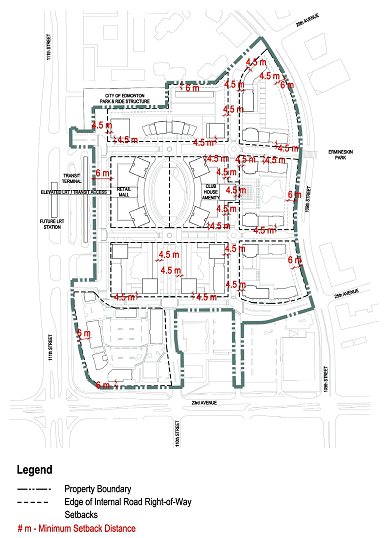
NOTE: If not indicated there is a minimum zero setback from the internal road right-of-way.
Active Residential and Commercial Frontages
APPENDIX IV
Open Space
APPENDIX V
Pedestrian Linkages
APPENDIX VI
Access and Circulation
APPENDIX VII
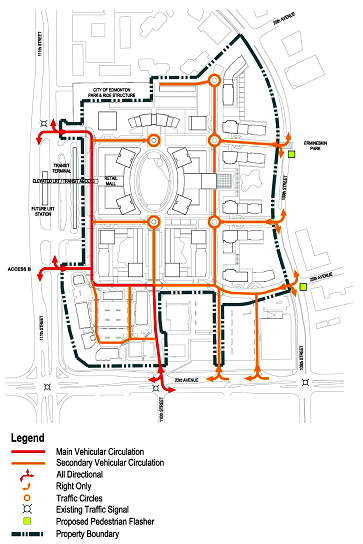
NOTE: The final configuration of accesses on 111 Street will be determined with the ultimate LRT design. Access B may not be all-directional.
APPENDIX VIII
Roadway Network Improvements Required for the Development
Improvements required with first phase of development (Funded by Developer)
Transit shelters with connector walks on roadways adjacent the development are to be provided to the satisfaction of the Transportation and Streets Department.
23 Avenue and 110 Street
westbound to northbound right turn bay
eastbound to northbound left turn signal phase
southbound to eastbound left turn signal phase
23 Avenue and 109 Street
westbound to southbound left turn signal phase
eastbound to northbound left turn signal phase
109 Street and site access located across from Ermineskin Park. Referred to as Access H in the Traffic and Parking Impact Assessment.
Installation of a pedestrian amber flasher
Improvements required following development of 50% of the residential units (Funded by Developer)
23 Avenue and 111 Street
third westbound through lane from 105 Street to Saddleback Road
eastbound to northbound left turn phase
29 Avenue / Saddleback Road 111 Street
northbound to westbound left turn signal phase
34 Avenue and 111 Street
westbound to southbound double left turn lane
northbound to westbound left turn signal phase
southbound to eastbound left turn signal phase
westbound to southbound left turn phase
Improvements required due to increases in background traffic (Funded by City subject to budget approval by City Council)
23 Avenue and 111 Street
westbound to southbound double left turn lane
northbound to westbound left turn signal phase
southbound to eastbound left turn signal phase
Improvements required with extension of LRT (Funded by City subject to budget approval by City Council)
111 Street
widen to 6 lanes as required to accommodate traffic and LRT
modifications to Access B and southern Transit Centre Access
westbound double left turn lane at northern site access on 111 Street (referred to as Access A in the Traffic and Parking Impact Assessment) / Transit Centre Access.