Bylaw 14808
Amendment No. 904
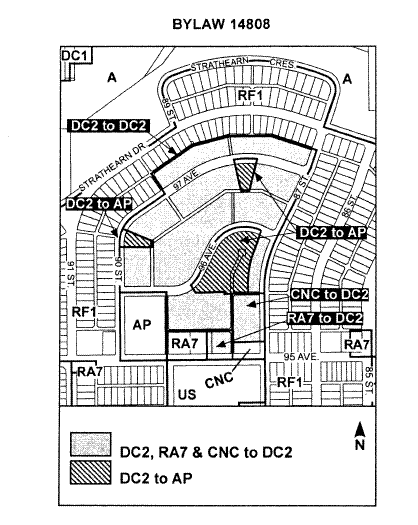
WHEREAS Lots 1, 8 and a portion of 7, Block 5; Lot 6, Block 6; Lot 29, Block 8, all in Plan 2528 HW, Block A, Plan 002 4690 and the road closed by Bylaw 14816, located north of 97 Avenue NW between 87 and 90 Streets NW, Strathearn, Edmonton, Alberta, are specified on the Zoning Map as (CNC) Neighbourhood Convenience Commercial Zone, (DC2) Site Specific Development Control Provision and (RA7) Low Rise Apartment Zone; and
WHEREAS an application was made to rezone the above described property to (AP) Public Parks Zone and (DC2) Site Specific Development Control Provision;
NOW THEREFORE after due compliance with the relevant provisions of the Municipal Government Act RSA 2000, ch. M-26, as amended, the Municipal Council of the City of Edmonton duly assembled enacts as follows:
1. The Zoning Map, being Part III to Bylaw 12800 The Edmonton Zoning Bylaw is hereby amended by rezoning the lands legally described as Lots 1, 8 and a portion of 7, Block 5; Lot 6, Block 6; Lot 29, Block 8, all in Plan 2528 HW, Block A, Plan 002 4690 and the road closed by Bylaw 14816, located north of 97 Avenue NW between 87 and 90 Streets NW, Strathearn, Edmonton, Alberta, which lands are shown on the sketch plan annexed hereto as Schedule ”A”, from (CNC) Neighbourhood Convenience Commercial Zone, (DC2) Site Specific Development Control Provision and (RA7) Low Rise Apartment Zone to (AP) Public Parks Zone and (DC2) Site Specific Development Control Provision.
2. The uses and regulations of the aforementioned DC2 Provision are annexed hereto as Schedule "B".
3. The sketch plan annexed hereto as Schedule ”A” and the uses and regulations of the DC2 Provision shown on Schedule ”B” annexed hereto are hereby incorporated into the Zoning Bylaw, being Part IV to Bylaw 12800, The Edmonton Zoning Bylaw.
To accommodate the comprehensive redevelopment of Strathearn Heights Apartment site into a mixed-use urban village, primarily residential, with a range of housing types complemented by small scale commercial uses.
This Provision shall apply to Lots 1, 8 and a portion of 7, Block 5; Lot 6, Block 6; Lot 29, Block 8, all in Plan 2528 H.W.; and Block A, Plan 002 4690, located north of 95 Avenue and west of 87 Street, Strathearn, as shown on Schedule A of this Bylaw, adopting this Provision.
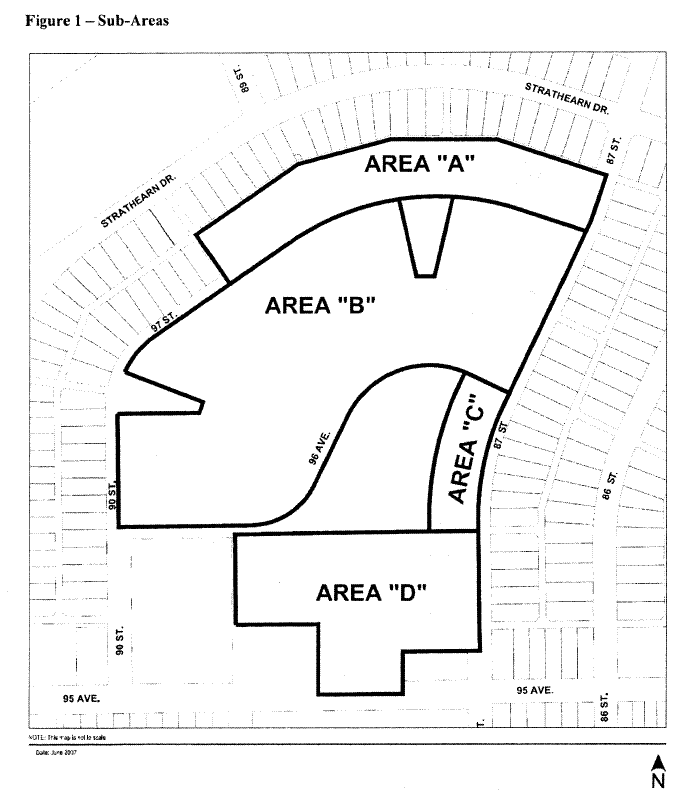
This Provision establishes four sub areas identified in Figure 1 and as follows:
Area A - row housing and stacked row housing
Area B - row housing, mid and high rise apartment housing
Area C - row housing and stacked row housing
Area D - residential and commercial mixed-use development including row housing, stacked row housing, mid and high rise apartment housing, live/work units, and a clubhouse/ amenity centre.
a. The urban village should be a place where people can live, work, shop, be entertained, and it should provide spaces and opportunities to enhance social interaction and recreation for the community.
b. To allow for a range of housing types and unit sizes, including row housing, stacked row housing, apartments, live-work units to provide for a wide range of income and demographic groups.
c. To enhance and extend active commercial frontages at ground level along 95 and 95A Avenues and 88 Street to serve local shopping needs.
3.2 Built form
a. To enliven the streets and promote walkability by designing buildings with active frontages, and multiple doorways and windows on residential units.
b. To apply relatively small floor plates to high-rise buildings to mitigate shade conditions on the site or adjacent properties.
c. To offer a number of public open spaces that provide opportunities for active and passive activities in formal and informal spaces, including such options as garden squares and park blocks.
d. To provide places and facilities that support a mixed neighbourhood demographic for existing and future residents.
e. To create strong linkages within the site and connecting the site to City transit facilities, the surrounding neighbourhood, parks, including the river valley, community amenities, and to surrounding communities.
3.3 Open Space
a. To ensure high quality open space design and landscaping that enable a year round use.
b. To provide spaces for public art, street furniture, and lighting which contribute to an enhanced pedestrian experience.
c. To minimize the ground surface area necessary for vehicular circulation, access and parking in order to increase the area devoted to open spaces and amenities by incorporating underground parking wherever possible.
d. To maintain as many of the existing trees as possible to provide shade in the summer months.
3.4 Circulation
a. To provide traffic calming measures to enhance pedestrian safety.
b. To provide adequate commercial, residential and visitors parking on site to mitigate overflow parking on adjacent streets.
c. To provide transit stops with shelters for transit users.
d. To provide weather-protected bicycle parking for longer-term use in a secure area.
e. To provide direct and convenient access to residential and commercial traffic including service vehicles and emergency response.
f. To lay out streets and lanes to reduce the impact of additional traffic on its surroundings and promote convenient and easy pedestrian and cyclist access both from and through the site.
3.5 Sustainability
a. To consider sustainable development principles in the planning and design of the development by providing a compact and well connected urban village.
b. To contribute to a socially sustainable community by providing housing for a range of household types, physical abilities, ages, incomes and demographics.
c. To encourage alternatives to the automobile, the development should be walkable, conducive to cycling, and transit supportive by giving high planning priority to compact, human-scale and mixed land use.
a. Minor Home Based Businesses
b. Residential Sales Centre
c. Row Housing
d. Stacked Row Housing
e. Fascia On-premises Signs
f. Freestanding On-premises Signs, limited to project identification, building construction identification and real estate advertising signs of a limited duration
a. Apartment Housing
b. Boarding and Lodging Houses suitable for seniors
c. Child Care Services
d. Extended Medical Treatment Services, limited to nursing homes
e. Minor Home Based Businesses
f. Residential Sales Centre
g. Row Housing
h. Stacked Row Housing
i. Fascia On-premises Signs
j. Projecting On-premises Signs
k. Freestanding On-premises Signs, limited to project identification, building construction identification and real estate advertising signs of a limited duration
Within Area C
a. Child Care Services
b. Minor Home Based Businesses
c. Residential Sales Centre
d. Row Housing
e. Stacked Row Housing
f. Fascia On-premises Signs
g. Projecting On-premises Signs
h. Freestanding On-premises Signs, limited to project identification, building construction identification and real estate advertising signs of a limited duration
Residential and Residential-Related Uses
a. Apartment Housing
b. Boarding and Lodging Houses suitable for seniors
c. Extended Medical Treatment Services, limited to nursing homes
d. Minor Home Based Businesses
e. Residential Sales Centre
f. Row Housing
g. Stacked Row Housing
h. Fascia On-premises Signs
i. Projecting On-premises Signs
j. Freestanding On-premises Signs, limited to project identification, building construction identification and real estate advertising signs of a limited duration
Commercial and Commercial-Related Uses
a. Bars and Neighbourhood Pubs, 100 occupants or less and 230 m2 of public space
b. Business Support Services
c. Child Care Services
d. Commercial Schools
e. Community Recreation Services
f. Convenience Retail Stores
g. Flea Market, limited to farmers market involving the sale of items such as local meats, produce and handicrafts
h. General Retail Stores
i. Government Services
j. Health Services
k. Household Repair Services
l. Indoor Participant Recreation Services
m. Minor Alcohol Sales, to a maximum of one wine store
n. Minor Amusement Establishments, as an accessory use to a restaurant
o. Major and Minor Secondhand Stores, limited solely to the sale of antique goods
p. Personal Service Shops
q. Professional, Financial and Office Support Services
r. Residential Sales Centre
s. Restaurants, 150 occupants or less and 345 m2 of public space
t. Specialty Food Services , 100 occupants or less and 230 m2 of public space
u. Fascia On-premises Signs
v. Projecting On-premises Signs
w. Freestanding On-premises Signs, limited to project identification, building construction identification and real estate advertising signs of a limited duration
Mixed Residential / Commercial Uses
Live Work Unit meaning:
a. a business operated from a Dwelling by the resident of the Dwelling, not exceeding 50 per cent of the gross floor area of the Dwelling Unit; and
b. a business limited to:
i. Personal Service Shops
ii. Professional, Financial and Office Support Services
iii. Custom Manufacturing Establishments
iv. Health Services
v. Private Education Services
5.0 Development Regulations
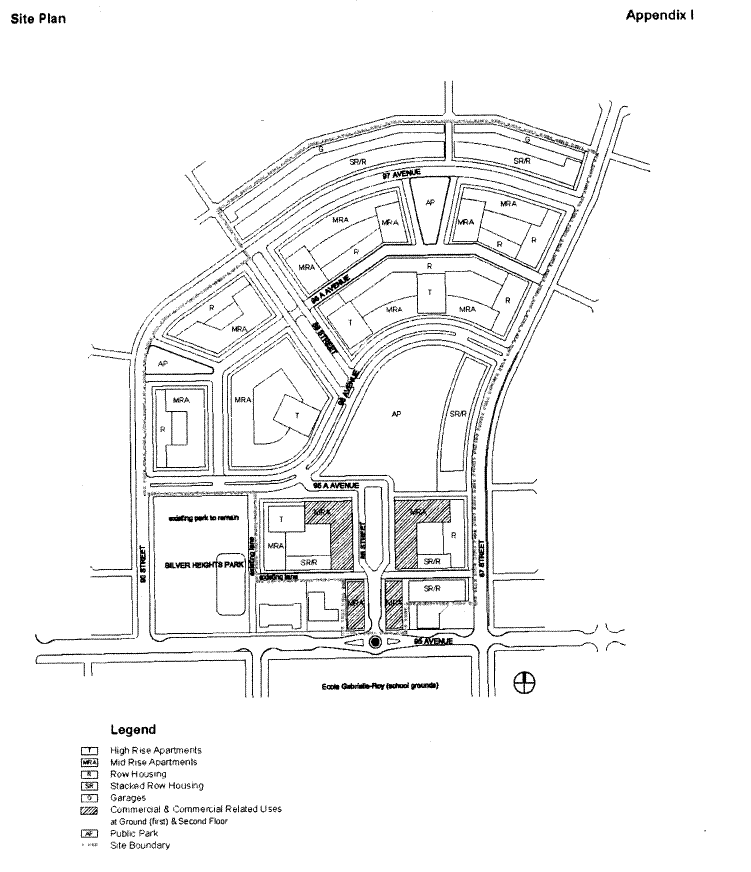
a. The site layout and building envelopes shall be in general accordance with the Site Plan as illustrated on Appendix I. The Development Officer may allow for minor variance in location of individual buildings provided that consideration has been given to the objectives and design regulations of this Provision and to visual, shadowing and other microclimatic impacts on adjacent residential development and to the traffic and parking implications for adjacent residential development provided that the overall permitted Density and Height set out in the Provision are not exceeded.
b. A maximum number of Dwelling units shall be 1,750.
c. The maximum Floor Area Ratio shall be 3.4 for the entire site.
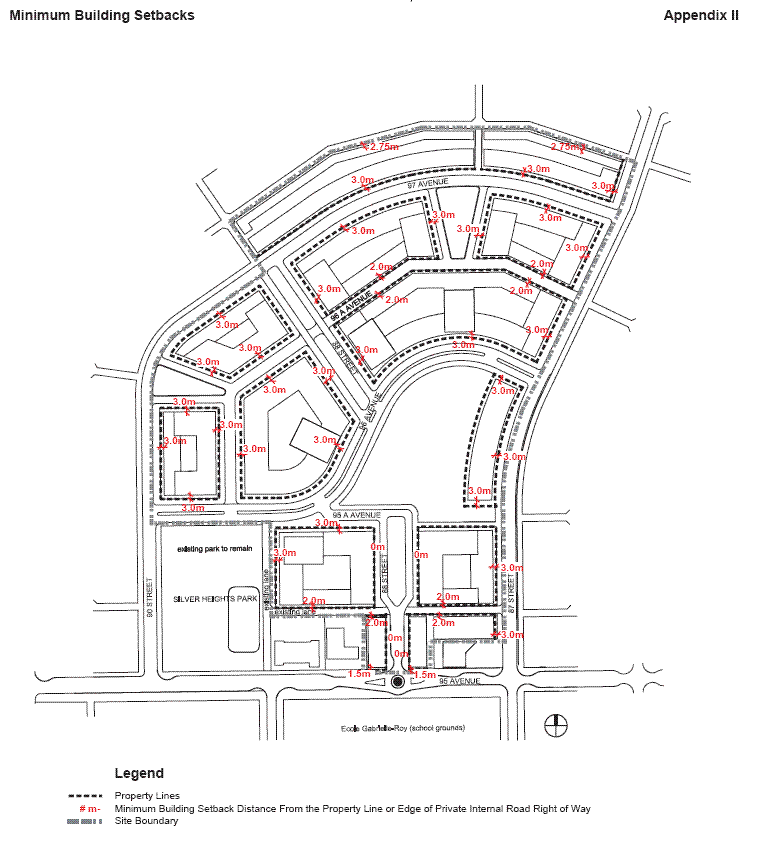
d. Minimum building Setbacks from the property line shall be as shown in Appendix II.
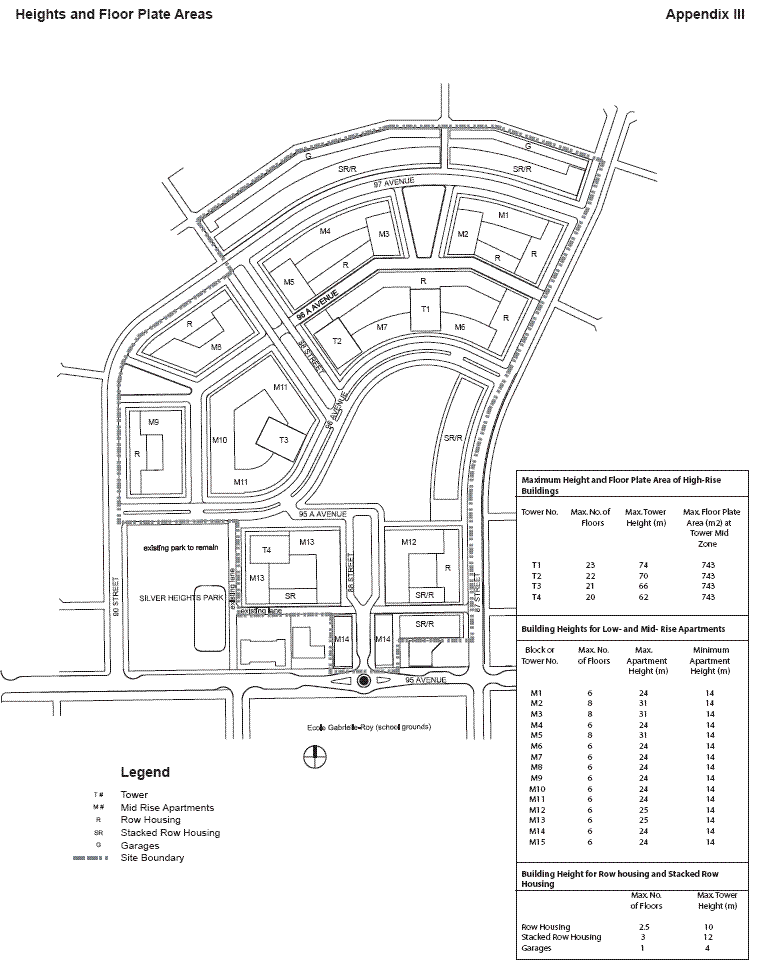
e. The maximum Building Height and floor plate area in the mid tower zone for high-rise apartment buildings shall be as specified in Table 1. The maximum Building Height for mid rise apartments shall be as specified in Table 2. The locations of towers and mid rise apartment housing are identified in Appendix III.
Tower No. |
Max. No. of Floors |
Max. Tower Height (m) |
Max. Floor Plate Area (m2) at Tower Mid Zone |
T1 |
23 |
74 |
743 |
T2 |
22 |
70 |
743 |
T3 |
21 |
66 |
743 |
T4 |
20 |
62 |
743 |
|
Block or Tower No. |
Max. No. of Floors |
Max. Apartment Height (m) |
Minimum Apartment Height (m) |
|
M1 |
6 |
24 |
14 |
|
M2 |
8 |
31 |
14 |
|
M3 |
8 |
31 |
14 |
|
M4 |
6 |
24 |
14 |
|
M5 |
8 |
31 |
14 |
|
M6 |
6 |
24 |
14 |
|
M7 |
6 |
24 |
14 |
|
M8 |
6 |
24 |
14 |
|
M9 |
6 |
24 |
14 |
|
M10 |
6 |
24 |
14 |
|
M11 |
6 |
24 |
14 |
|
M12 |
6 |
25 |
14 |
|
M13 |
6 |
25 |
14 |
|
M14 |
6 |
24 |
14 |
|
M15 |
6 |
24 |
14 |
f. The maximum Building Height for Row Housing shall not exceed 2.5 Storeys or 10 m.
g. The maximum Building Height for Stacked Row Housing shall not exceed 3 Storeys or 12 m.
h. The maximum building height for Accessory Buildings (garage) shall not exceed one Storey or 4 m.
i. The maximum building area for commercial and commercial related uses in Area D shall not exceed 3,716 m2 and shall be limited to the first and second floor as identified in Appendix I.
j. Row Housing/ Stacked Row Housing shall be developed to provide a visual break/articulation in the building façade. The break shall be articulated by a combination of recesses, projections, change in building materials, colors, or a physical break in building mass.
k. Accessory Buildings (garage) shall have a physical break aligned with the break in adjacent Row Housing/ Stacked Row Housing located within Area A.
l. Notwithstanding Section 46, a minimum Amenity Area of 7.5 m2 per Dwelling shall be provided on the entire site including courtyards, balconies, roof top patios/gardens, grade level display gardens and terraces.
m. Live Work Units shall comply with the following regulations:
i. the live work units shall be located within Area D;
ii. each unit shall have individual access at grade;
iii. there shall be no exterior display or advertisement other than an identification plaque or Sign a maximum of 20 cm x 30.5 cm in size located on the Dwelling;
iv. the number of non-resident employees or business partners working on-site shall not exceed two per unit at any one time;
v. there shall be no outdoor business activity, or outdoor storage of material or equipment associated with the Business. Indoor storage related to the business activity shall be allowed in either the Dwelling or Accessory buildings;
vi. there shall be no nuisance created by the business by way of electronic interference, dust, noise, odor, smoke, bright light or anything of an offensive or objectionable nature which is detectable to normal sensory perception outside the Live Work unit; and
vii. each application for a Development Permit for the Use Class Live Work Unit shall include a description of the business to be undertaken at the premises, an indication of the number of business visits per week, provision for vehicular and bicycle parking for visitors and employees, and where any materials or equipment associated with the business use are to be stored.
n. All mechanical equipment, including roof mechanical units, shall be concealed by screening in a manner compatible with the architectural character of the building, or concealed by incorporating it within the building framework.
o. Landscaping shall be in accordance with Section 7.0 of this provision to the satisfaction of the Development Officer.
p. Bicycle Parking spaces shall be provided for residential units in a weather protected and secure area.
q. The driveway ramp for underground parking structures shall be at grade at the property line and must not exceed a slope of 6% for a distance of 4.5 m inside the property line, or to the satisfaction of the Transportation Department. Parkade ramps shall have a minimum width of 6.0 m for a distance of 5.5 m into the site to accommodate two-way traffic.
r. Vehicular parking shall be developed in accordance with Section 54 of the Zoning Bylaw.
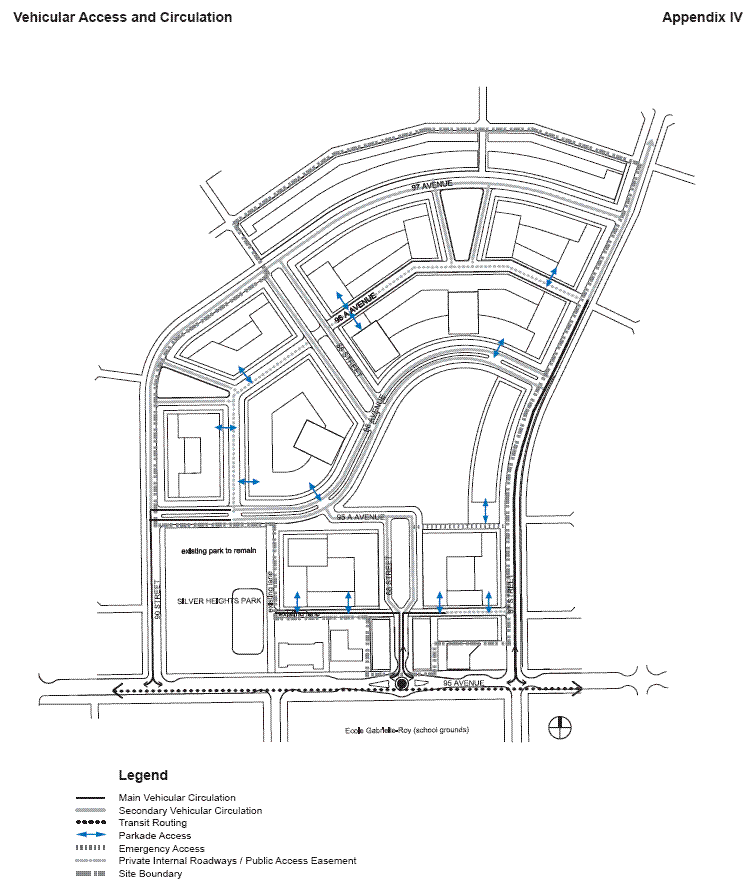
s. Accesses to underground parking shall be located in general accordance and to the satisfaction of the Transportation Department as shown in Appendix IV.
t. Garbage collection for all buildings shall be located within parking structures or buildings and if at grade shall be located, constructed and screened from view of the adjacent residential sites. Gates and/or doors of the garbage enclosures must not open or encroach into public or private road right-of-way.
u. Site and building plans shall be submitted with the Development Permit application and shall have regard to the Design Regulations in Section 6.0 of this provision to the satisfaction of the Development Officer.
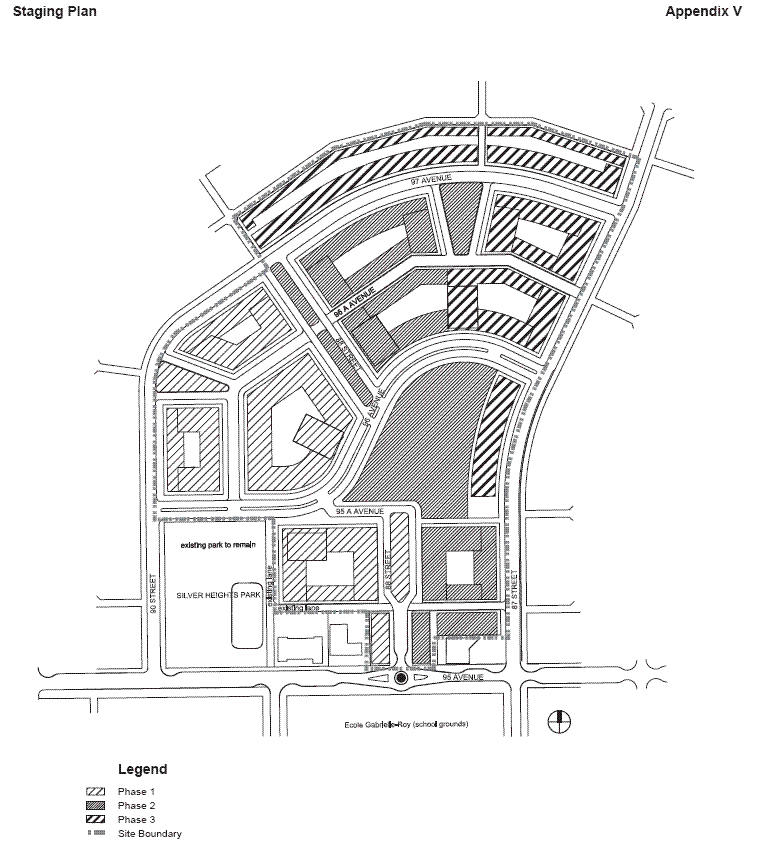
v. Development shall be generally staged in compliance with the Staging Plan as illustrated on Appendix V.
w. Signs shall comply with the regulations found in Schedule 59E of the Zoning Bylaw.
x. Notwithstanding Section 85.3 and 85.4, minor alcohol sales shall be permitted.
y. The owner shall submit a Crime Prevention Through Environmental Design (CPTED) Assessment that shall be reviewed and accepted by the Development Officer prior to the issuance of a Development Permit to ensure that development on the Site provides a safe urban environment in accordance with the guidelines and principles established in the Design Guide for a Safer City.
z. Prior to issuance of a development permit, the Development Officer shall ensure that a signed agreement has been executed between the City and the owner in which the owner is to allow the City to purchase 5% of the total residential dwelling units, at 85% of list price, as affordable housing at the discretion of the City of Edmonton.
aa. Universal accessibility and universal design shall be developed as follows:
i. The main building entrance and the first level parkade lobby entrance to apartment buildings shall be designed to meet universal accessibility standards in the following ways:
A. main entranced doors to meet universal design standards;
B. level changes from the sidewalk to entrances of apartment buildings shall be minimized; and
C. sidewalk furniture and other elements shall be located out of the travel path to ensure they are not obstacles to apartment building access.
ii. Universal design features shall be incorporated into assisted living facilities where physically and financially feasible.
In order to achieve the General Purpose of this Direct Control Provision and objectives, design regulations for the comprehensive development of the entire site are provided.
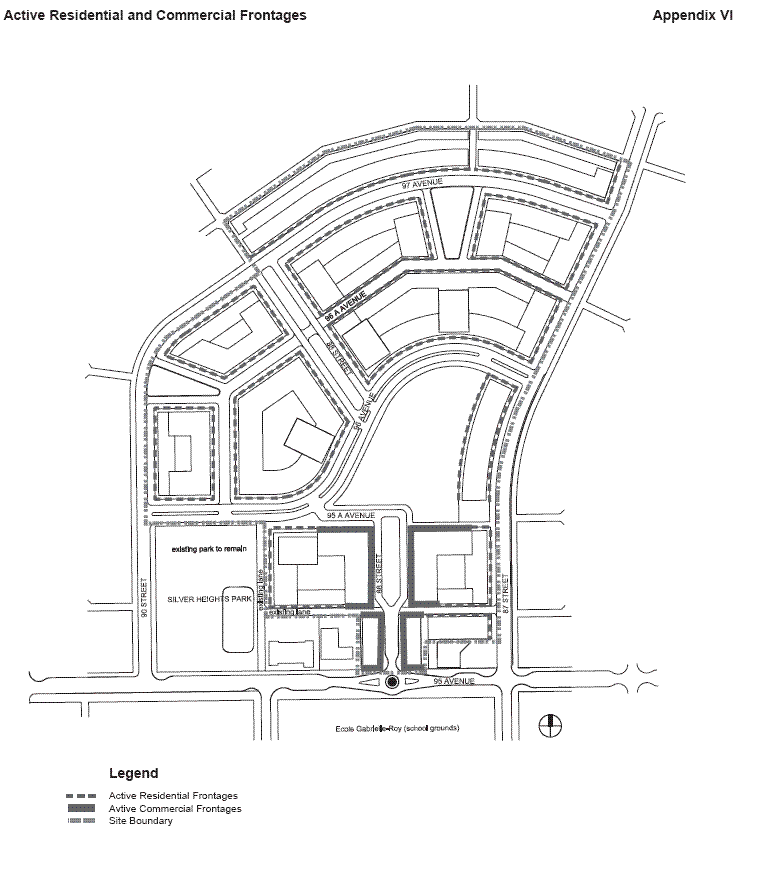
a. Active commercial frontages as shown in Appendix VI shall be developed according to the following regulations:
i. There shall be building/unit entrances and windows fronting public roadway;
ii. At least 70% of ground floor building façades shall be glazed on the exterior; and
iii. At least 50% of the ground floor commercial premises in Area D shall consist of individual shops of not more than 12 m frontage.
iv. Where Commercial Uses are developed on the ground (first) floor of a building, weather protection in the form of a canopy or any other architectural element shall be provided above entrances to create a comfortable environment for pedestrians.
a. Active residential frontages as shown in Appendix VI shall include ground level units with individual unit external accesses and use features such as porches, staircases and stoops.
b. The first floor of any residential frontage, including associated entranceway, shall have a maximum grade separation of 1.0 m from any adjacent public sidewalk. 25% of residential frontages may have a grade separation greater than 1.0 m up to a maximum 1.5 m where sloping conditions apply.
6.2 Built Form Regulations
a. In accordance with Appendix I, the following building typologies will be developed to provide a transition in scale, building height and massing in relation to the existing neighbourhood, as illustrated in Figures 2 and 3.
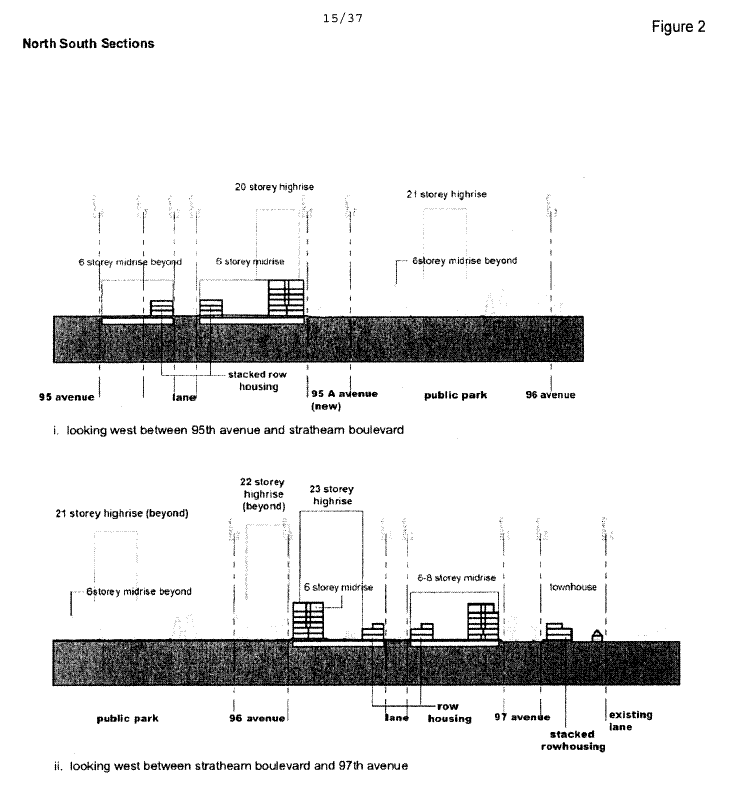
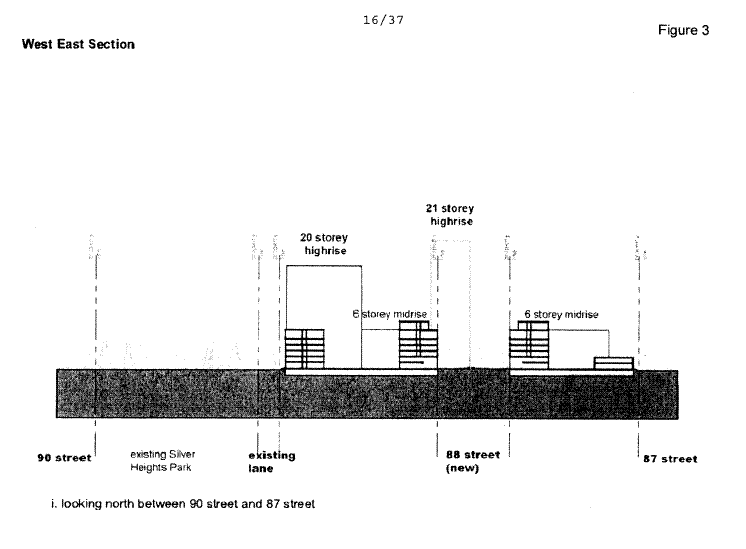
Row Housing, Stacked Row Housing and Mid Rise Apartments
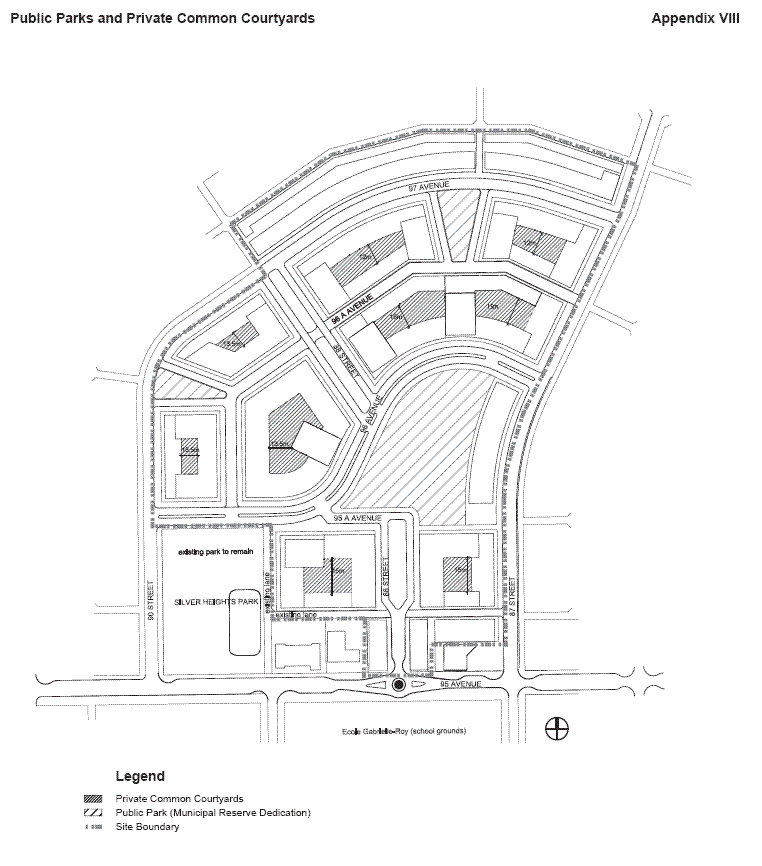
a. The separation space between buildings in courtyards shall be in accordance with Appendix VIII.
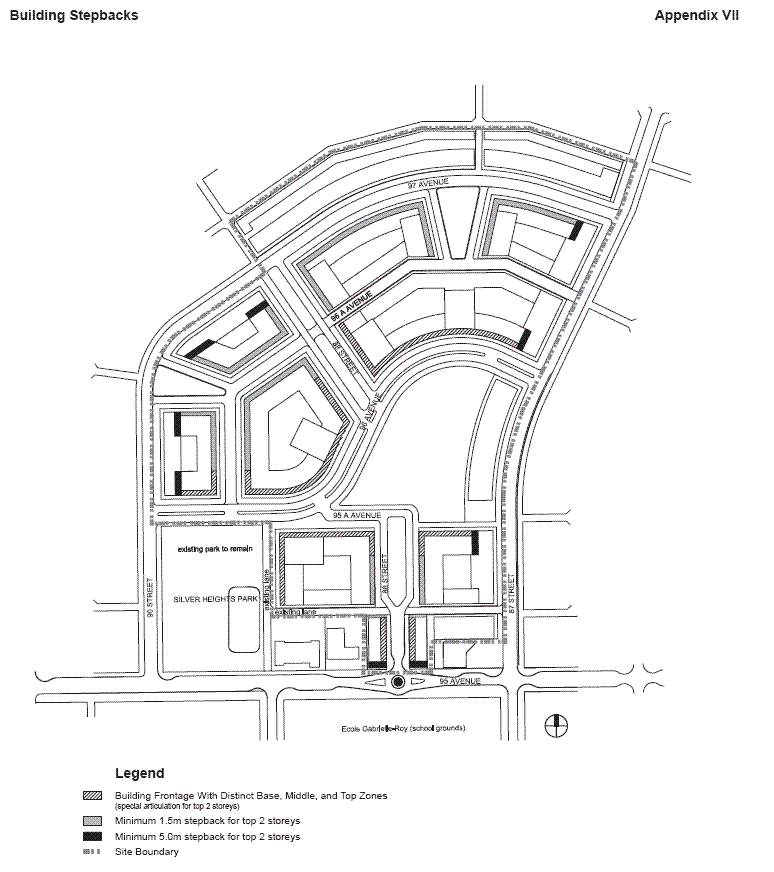
b. The top two storeys on all mid rise apartments shall have a minimum stepback for a specified distance (1.5 m or 5.0 m) on all faces as shown on Appendix VII.
c. The top two storeys of the mid rise apartments shall be articulated differently through the use of materials, setbacks, canopies, trusses or other architectural features.
d. There shall be no external staircases permitted within the front setback to the top units of stacked row housing.
High Rise Apartments (20-23 storeys)
a. The high-rise buildings shall be located near the centre of the site, as illustrated in Figures 2 and 3 and shall be in general accordance with the Site Plan as shown on Appendix I.
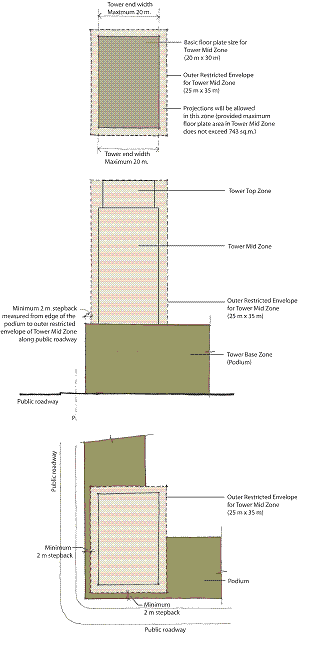
b. Residential towers shall be comprised of three distinct vertical zones: tower base, tower mid, and tower top zones. The distinct nature of the three vertical zones shall be integrated both through stepbacks in the building mass, and/or through the architectural treatment of the façades, as follows and according to Figure 4:
i. Tower Base Zone (Podium)
The tower base zone shall be integrated with row housing or mid-rise apartments and shall be a maximum of 6 storeys in height.
ii. Tower Mid Zone
The tower mid zone shall be differentiated from the tower base zone, but should reinforce some of the design details, materials, and architectural expression from the architecture below. While there should be similarity in materials to create a cohesive building, a variety in architectural styles should be encouraged among the buildings on the site.
A typical floor plate size shall be 30m long by 20m wide, with projections out to an outer restricted envelope which is 35m long by 25m wide. The end width of the towers shall be a maximum 20m.
The tower mid zone shall provide a minimum 2.0 m step back from the tower base zone (podium) along public roadway. The step back shall be measured from the outer restricted envelope of the tower mid zone to the edge of the tower base zone (podium).
Floor plates in the tower mid zone shall not exceed limits identified in Table 1 (Section 5.0).
iii. Tower Top Zone
The tower top zone shall be 2 to 4 storeys in height and shall be stepbacked on at least two facades. In addition, the area of a typical floor plate in the tower top zone shall be 10% smaller than the area of the typical floor plate below. Special architectural detailing and use of transparent materials shall be required to create an interesting skyline.
c. The minimum separation space between towers shall be a minimum of 30 m or the widest dimension at the tower mid zone (length/width) of the largest tower, whichever is greater.
Figure 4: Residential Towers
Architectural Treatment of Buildings
a. Quality finishing materials for all of the development shall be used such as stone, masonry, fiber cement siding, acrylic stucco, wood panel, metal and glass on the lower floors, and predominately metal and glass for the upper floors.
b. The use of vinyl and masonry stucco as a finishing material shall not be permitted.
c. All building façades shall use compatible and harmonious exterior finishing materials.
d. The design of the high rise apartments shall be treated as signature buildings with 360 degree architecture.
6.4 Building Relationship to the Street
a. Larger buildings with long street fronts shall be designed with detail and articulation to create an attractive streetscape.
b. Blank walls shall be avoided by extensive use of active frontages, which allow for interaction between people in the building and people on the street to maintain an attractive streetscape.
a. A detailed landscaping plan shall be submitted in accordance with Section 55 of the Zoning Bylaw except that:
i. The proportion of deciduous to coniferous trees and shrubs shall be approximately 75:25; and
ii. One tree for each 25 m2 shall be required in the Yard or Setback at grade.
b. A landscaping feature with focus on mass shrub planting, or acceptable alternatives, integrated with other site elements shall be provided in the setback to the satisfaction of the Development Officer.
7.2 Private Common Courtyards
a. Private Common Courtyards shall be provided in general accordance with Appendix VIII. Each courtyard shall be landscaped with a focus on an appropriate combination of soft and hard landscaping.
b. Enhanced landscaping treatment for private common courtyards shall provide amenity space for the residents and may include seating areas, pedestrian oriented lighting and trees.
c. The private common courtyards shall have a minimum separation distance between buildings as shown on Appendix VIII.
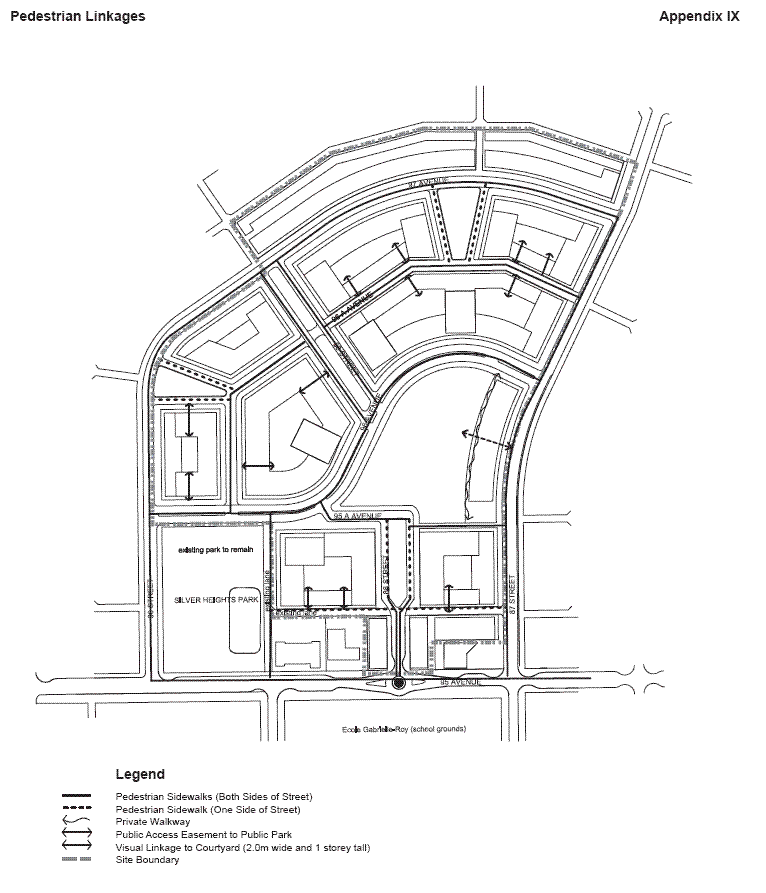
d. A visual linkage shall be provided to connect (public and private) roadways and the private common courtyards as shown in Appendix IX. The linkage shall be a minimum 2 m wide and 1 storey in height. The entrance of the linkage shall be articulated by a combination of lighting, landscaping, archways, architectural articulations and/or building materials.
a. Vehicular access and circulation shall be developed in accordance with Appendix IV.
b. Parking shall be located entirely underground or in structured parking limited to one storey above grade if concealed by residential and/or commercial uses except for Area A. See Figure 5.
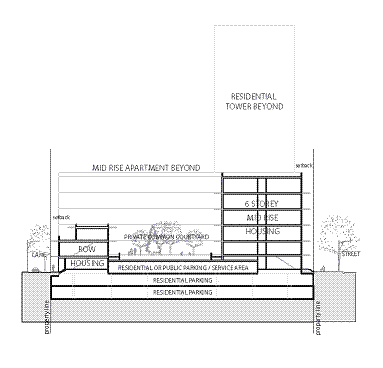
Figure 5: Section of Parkade structure
c. The underground and/or structured parking shall not interfere with the viability of landscaping in the front yard setback and private common courtyards. Adequate soil depth for landscaping such as trees, shrubs and grass over the parkade shall be provided to the satisfaction of the City of Edmonton.
d. Sidewalks shall be separated from the vehicular traffic by landscaping wherever possible with the exception of live-work areas.
e. Service and emergency response vehicles shall have clear and effective access to the buildings on the site.
f. Pedestrian scale lighting shall be required along all private internal roadways as shown on Appendix IV.
g. The owner shall register a public access easement for all private internal roadways as identified on Appendix IV.
9.0 Pedestrian Circulation
a. Pedestrian circulation shall be developed in accordance with Appendix IX.
b. A 6.0 m public access shall be developed within Area C between the public park and the row housing/stacked row housing to provide access to the public park. The built form shall be setback 1.5 m on either side of the public access.
c. The owner shall register a public access easement in Area C for the public access as shown in Appendix IX.
d. A decorative boundary element shall be provided to distinguish between the public park and private property through a combination of low vertical elements and material distinctions, to a maximum height of 0.6 m.
e. Internal private roadways and pedestrian paths shall be illuminated at night with pedestrian scale lighting.
10.0 IMPROVEMENTS
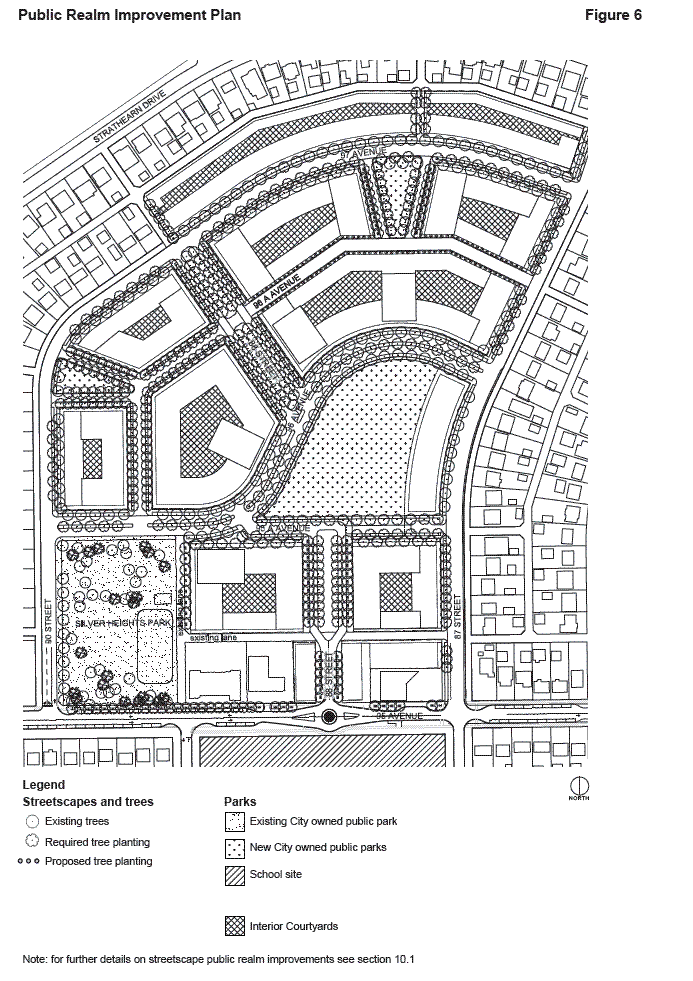
10.1 Public Realm Improvement Plan
The following improvements shall be funded by the developer. See Figure 6.
95 Avenue
a. Streetscape along development frontage (north side) shall include a minimum 2 m sidewalk with curb ramps and boulevard trees.
b. The construction of traffic calming measures (north and south sides, 87 Street through 90 Street), including but not limited to resurfacing / reconstruction of the roadway and existing curbs, curb extensions, bus bulges, and roundabouts, new sidewalks, curb ramps, and pavement markings, shall be the responsibility of the owner/applicant, subject to:
i. Geometric feasibility and accommodation of bus movements, to be determined to the satisfaction of the Transportation Department.
ii. Community support to the satisfaction of the Transportation Department.
88 Street (new road right-of-way between 95 Avenue and 95A Avenue)
a. Construct a centre median with double row of boulevard trees that is generally 15 m wide.
b. The centre median shall include a combination of shrub planting, sod or other ground cover alternative to the satisfaction of the City of Edmonton.
c. Boulevard tree planting shall be incorporated along sidewalks (north of lane) that are generally 5.0 m wide.
d. Boulevard tree planting shall be incorporated along sidewalks (south of lane) that are generally 4.0 m wide.
e. Benches, pedestrian lighting, street furniture and paving treatment shall be incorporated in clusters that are integrated with the overall site planning and building architecture.
f. All directional access shall be provided to adjacent alleys and to 95 Avenue.
95A Avenue (new road right-of-way)
a. Construct new road right-of-way connecting 88 Street to 96 Avenue.
b. Boulevard tree planting shall be incorporated along a minimum 2 m sidewalk (north and south side) connecting to 87 Street to 96 Avenue.
c. Development of 6 m emergency access with bollards as shown on Appendix IV.
d. All directional access shall be provided between 95A Avenue and 96 Avenue.
96 Avenue
a. Construct a centre median that is generally 2.5 m wide with boulevard trees.
b. Existing boulevard trees shall be maintained and incorporated into the design of the street wherever feasible.
c. Development of minimum 2 m sidewalks (north and south side of roadway).
d. Benches, pedestrian lighting, street furniture and paving treatment shall be incorporated in clusters that are integrated with the overall site planning and building architecture.
e. All directional access shall be provided at all intersections with 96 Avenue including 87 and 90 Street.
88 Street (new road right-of-way between 96 Avenue and 97 Avenue)
a. Construct a centre median that is generally 10 m wide with a double row of boulevard trees.
b. The centre median shall include a combination of shrub planting, sod or other ground cover alternative to the satisfaction of the City of Edmonton.
c. Boulevard tree planting shall be incorporated along minimum 2 m sidewalks.
d. Benches, pedestrian lighting, street furniture and paving treatment shall be incorporated in clusters that are integrated with the overall site planning and building architecture.
e. All directional access shall be provided at all intersections with 96A Avenue including 96 and 97 Avenue and to any access to underground parking.
Public Park (garden square - 97 Avenue)
a. A new 0.142 ha public park shall be dedicated as municipal reserve to the City of Edmonton.
b. The developer shall enter into a Municipal Agreement with the City of Edmonton to design, construct and maintain this public park.
c. Develop as a formal garden with tree planting and furnishings to the satisfaction of the City of Edmonton.
d. Boulevard tree planting shall be incorporated along sidewalks that are generally 4.0 m wide (on the residential side). Street furniture, lighting and additional landscaping may also be incorporated into the boulevards.
e. The one way directional lane shall be developed with curb return accesses, a minimum 7.5 m and properly signed. Alternatively, if the lane remains in private ownership, a public access easement shall be required and the road right-of-way may be reduced to the satisfaction of the City of Edmonton.
Public Park (garden square at 90 Street)
a. A new 0.094 ha public park shall be dedicated as municipal reserve to the City of Edmonton
b. The developer shall enter into a Municipal Agreement with the City of Edmonton to design, construct and maintain this public park.
c. Develop as a formal garden with tree planting and furnishings to the satisfaction of the City of Edmonton.
d. Boulevard tree planting shall be incorporated along sidewalks that are generally 4.0 m wide (on residential side). Street furniture, lighting and additional landscaping may also be incorporated into the boulevards.
e. The one way directional lane shall be developed with curb return accesses, a minimum 7.5 m and properly signed. Alternatively, if the lane remains in private ownership, a public access easement shall be required and the road right-of-way may be reduced to the satisfaction of the City of Edmonton.
Alley (between 97 Avenue and Strathearn Drive)
a. Special paving shall be constructed for the portion of the lane from 97 Avenue to Strathearn Drive.
b. ”r;Zebra” crosswalk, pedestrian signs and pedestrian lighting shall be located in the lane to the satisfaction of the Transportation Department.
c. Planting and landscaping shall be developed on the developer’s private property.
Public Park (between 95A Avenue and 96 Avenue and west of 87 Street)
a. A 1.014 ha public park shall be dedicated as municipal reserve to the City of Edmonton.
b. The public park shall be completed to base level development (grade, level, sod and trees at 50 trees per ha). Credit shall be given for existing mature ash and elm trees located within the public park subject to the satisfaction of the City of Edmonton.
c. The developer shall prepare a development concept for enhanced park development which will identify the vision and future opportunities for the park. Enhanced park development may include elements such as walkways, benches, gazebos, plazas and water features. This shall be done in consultation with the City of Edmonton and allow opportunity for public input.
d. Further, the developer will construct enhanced park development based on final development concept, in consultation with the City of Edmonton, to a maximum construction value of $450,000 in accordance with City Design and Construction Standards.
Existing alley (north of 95 Avenue and west of 88 Street)
a. The alley shall be paved to City standards.
b. Boulevard tree planting shall be incorporated along 2.0 m sidewalks.
c. Pedestrian lighting and paving treatment shall be developed.
Existing alley (adjacent to the Silver Heights Park)
a. The alley shall be paved to City standards.
b. Boulevard tree planting shall be incorporated along a sidewalk on the east side of the lane that is generally 5.0 m wide. Street furniture, lighting and additional landscaping may also be incorporated into the boulevards
Note:
· All deciduous trees shall be a minimum of 75 mm caliper and minimum 6 m on centre.
· Collector and local roadways shall be landscaped including boulevard trees in accordance with City Design and Constructions Standards.
· Plant species will be assessed for appropriateness at the engineering drawing or development permit review stage.
· The existing boulevard trees shall be protected wherever possible by hoarding or other means during construction. If boulevard trees are damaged or unavoidably need to be removed then the City’s Corporate Tree Policy applies.
· All public realm improvements shall be subject to the City of Edmonton Final Acceptance Certificate and the Construction Completion Certificate processes.
10.2 Transportation Improvements
a. In addition to improvements required under Section 10.1, the developer shall enter into servicing agreement(s) to undertake roadway improvements necessitated by the development, generally as listed below:
i. Sidewalks immediately adjacent to the site shall be replaced including curb ramps at appropriate intersection locations.
ii. The portions of local roadways (95 Avenue from the intersection of 87 to the intersection of 90 Street (both sides), 87 Street from 95 Avenue to the alley north of 97 Avenue (west side), 90 Street from 95 to 97 Avenue (east side) and all roadways and alleys internal to the site) shall be resurfaced or reconstructed as required, including curb repairs and new pavement as a responsibility of the owner.
iii. Any sidewalk, boulevard or roadway damage occurring as a result of construction traffic shall be restored to the satisfaction of the Transportation Department, as per Section 15.5(f) of the Zoning Bylaw. The sidewalks, boulevards, and roadways shall be inspected by a Roadway Maintenance Inspector prior to construction, and again once construction is complete. All expenses incurred for repair shall be borne by the owner/applicant.
iv. Two bus stops adjacent to the site (north and south sides of 95 Avenue) shall be relocated from 87 Street to 88 Street. Both bus stops shall require upgrade with development. The bus stops shall be reconstructed with 9.0 m x 2.1 m concrete bus stop pads and 2.0 m x 3.0 m concrete shelter pads with bus shelters.
b. The developer shall be responsible for all costs, including signing and pavement markings, to implement the changes to the roadway geometry below. Engineering drawings for any geometric changes must be reviewed and approved by both the Transportation Planning and Streets Engineering Branches of the Transportation Department.
i. Intersection of 95 Avenue and 85 Street: The two eastbound lanes on the west approach shall be improved by separating the through / left turning movements from the right turning movement.
ii. Intersection of 95 Avenue and 87 Street: Parking shall be banned on the west side of 87 Street between 95 Avenue and the east-west alley north of 95 Avenue in order to provide two southbound lanes on the approach to 95 Avenue. Two southbound lanes will allow for southbound left turns and southbound right turns to occur concurrently, improving the operation of the intersection.
iii. Intersection of 95 Avenue and 90 Street: Parking shall be banned on the west side of 90 Street between 95 Avenue and the east-west alley north of 95 Avenue in order to provide two southbound lanes on the approach to 95 Avenue. Two southbound lanes will allow for southbound left turns and southbound right turns to occur concurrently, improving the operation of the intersection.
c. The City and the developer shall mutually enter into an agreement to exchange lands for new public roadway rights-of-way or conversely, to privatize pre-existing public road rights-of-way. Prior to the issuance of any development permit or subdivision approval, a bylaw to close 96 A Avenue, between 87 Street and 95 A Avenue, along with other road rights-of-way, necessary to facilitate a private internal roadway and development must be approved pursuant to this Provision.
10.3 Utilities Improvements
a. Separation of existing combined sewer into individual sanitary and storm sewer systems shall be undertaken as per the Servicing Report submitted in support of the rezoning application.
b. Upgrade existing watermains and relocating from alleys to roadways.
10.4 Public Art
a. Public art shall be provided on the site and:
i. The developer shall provide public art to a value of $500,000 staged over the build out of the site.
ii. A committee with representation from the developer and the arts community shall oversee this public art program.
iii. The public art shall ideally be located in the public parks.
iv. The developer shall contribute $250,000 to the Art Gallery of Alberta over a five year period.
11.0 Development Guidelines
a. The design of rooftops visible from high-rise buildings should be carefully considered. Where physically and economically feasible, green roofs, rooftop gardens and patios should be provided to improve rooftop aesthetics and provide additional amenity space.
b. Variation of building materials and colors should be used to break monotony of long building facades.
c. Dwellings and other elements of the development should be sited and oriented to minimize their impact on other Dwellings, considering such things as daylight, sunlight, ventilation, quiet, visual privacy and views.
d. Maintain as many of the existing trees as possible to provide shade in the summer months.
e. Safe and attractive pedestrian linkages to people of all abilities should be provided between various land uses within the site, surrounding neighbourhood and transit facilities.
f. All buildings should provide active and inviting streetscapes at ground level, buildings should feature individual doorways, stoops, porches and windows at ground level.
g. Structure parking facilities should be designed at street level to minimize the size of the entrances to parking facilities to maintain an attractive pedestrian environment.
h. To minimize spillover parking into the adjacent residential areas, selling parking stall(s) with purchase and/or rental by tenants should be encouraged with every unit.
i. Additional bicycle parking racks are encouraged to be placed on road right-of-way subject to the review and approval of the Transportation Department.
j. Consideration may be given to the incorporation of bus shelters with adjacent structures and/or the architectural detailing of the shelters to enhance development.
k. Universally accessible design should be considered in the architecture of buildings and the design of open spaces where economically and physically feasible. Development should be designed to be accessible to persons in wheelchairs, motorized scooters, strollers and persons with special needs.
l. Where economically and physically feasible, buildings should be designed to include on-site alternative energy sources.
m. The incorporation of features such as recycling facilities, water saving strategies, low-water landscaping, energy-efficient lighting, green roofs and other devices should be considered where economically and physically feasible in building and site designs to reduce the consumption of energy and materials.