Bylaw 15039
Amendment No. 1012
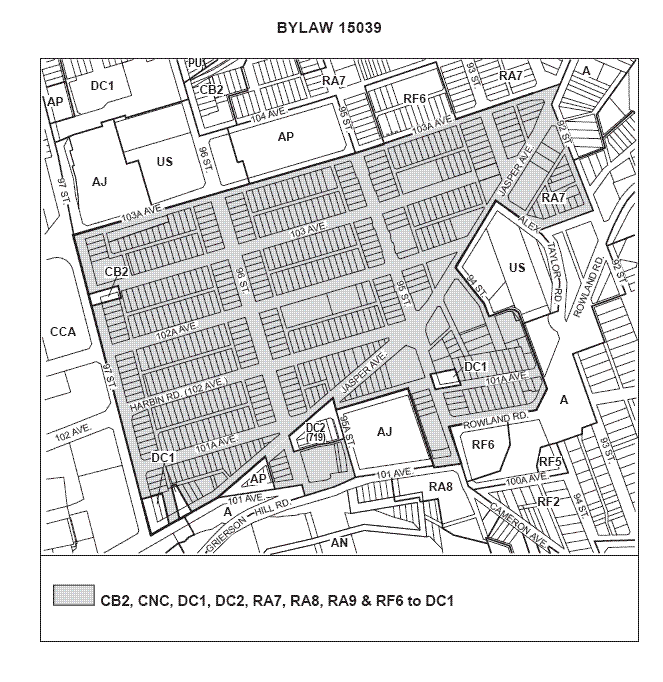
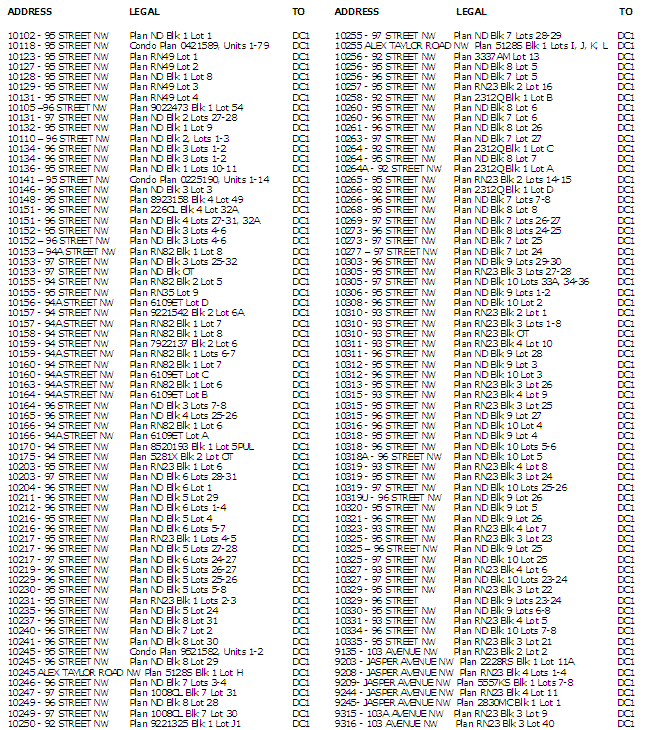
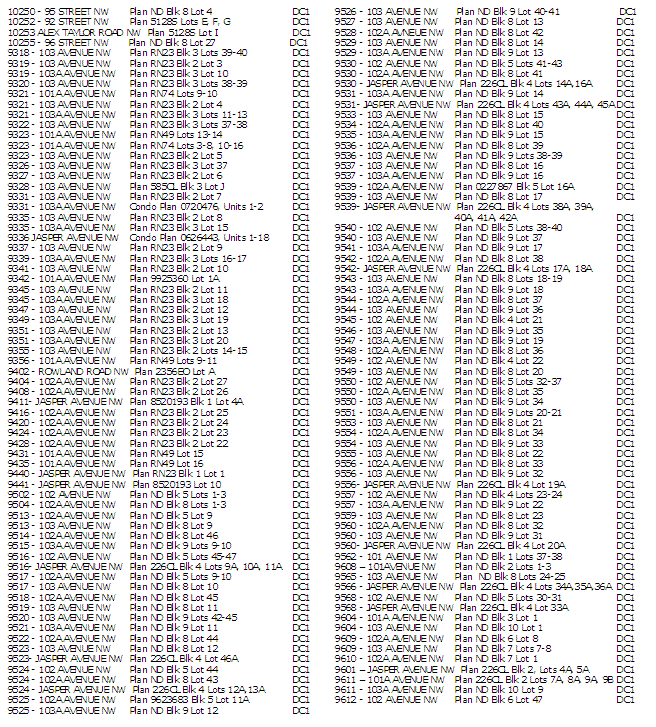
WHEREAS the lands shown on Schedule "A" and legally described on Schedule "B", located between 101 and 103A Avenues and between 92 and 97 Streets, Boyle Street, Edmonton, Alberta, are specified on the Zoning Map as (CB2) General Business Zone, (CNC) Neighbourhood Convenience Commercial Zone, (DC1) Direct Development Control Provision, (DC2) Site Specific Development Control Provision, (RA7) Low Rise Apartment Zone, (RA8) Medium Rise Apartment Zone, (RA9) High Rise Apartment Zone and (RF6) Medium Density Multiple Family Zone; and
WHEREAS an application was made to rezone the properties legally described on Schedule "B" to (DC1) Direct Development Control Provision;
NOW THEREFORE after due compliance with the relevant provisions of the Municipal Government Act RSA 2000, ch. M-26, as amended, the Municipal Council of the City of Edmonton duly assembled enacts as follows:
1. The Zoning Map, being Part III to Bylaw 12800 The Edmonton Zoning Bylaw is hereby amended by redistricting the lands legally described on Schedule "B" located between 101 and 103A Avenues and between 92 and 97 Streets, Boyle Street, Edmonton, Alberta, which lands are shown on the sketch plan annexed hereto as Schedule "A", from (CB2) General Business Zone, (CNC) Neighbourhood Convenience Commercial Zone, (DC1) Direct Development Control Provision, (DC2) Site Specific Development Control Provision, (RA7) Low Rise Apartment Zone, (RA8) Medium Rise Apartment Zone, (RA9) High Rise Apartment Zone and (RF6) Medium Density Multiple Family Zone; to (DC1) Direct Development Control Provision, all as more specifically described on Schedule "B".
2. The uses and regulations of the aforementioned DC1 Provisions are annexed hereto as Schedules "C, D, E, F, G, H, I and J".
3. Appendix I of the Pedestrian Commercial Shopping Street Overlay being Section 819 of the Edmonton Zoning Bylaw is hereby amended by deleting the lands legally described as Lots 1-6, Block 1, Lots 14-21, Block 2, Lot 21-28, Block 3, all in Plan RN23; Lots 28-31, Block 7, Plan 1008CL; Block OT, Plan 8421054; Lots 9-17, Block 3, Lots 1-8 and 24-27, Block 5, Lots 5-8 and 24-47, Block 6, Lots 1-8 and 24-31, Block 7, Lots 1-8 and 24-31, Block 8, Lots 1-8 and 23-30, Block 9, Lot 33, Lot A and Lots 1-26, Block 10, all in Plan ND; located south of 103A Avenue and east of 97 Street, Boyle Street, Edmonton, Alberta within the area of application of the Pedestrian Commercial Shopping Street Overlay.
SCHEDULE "A"
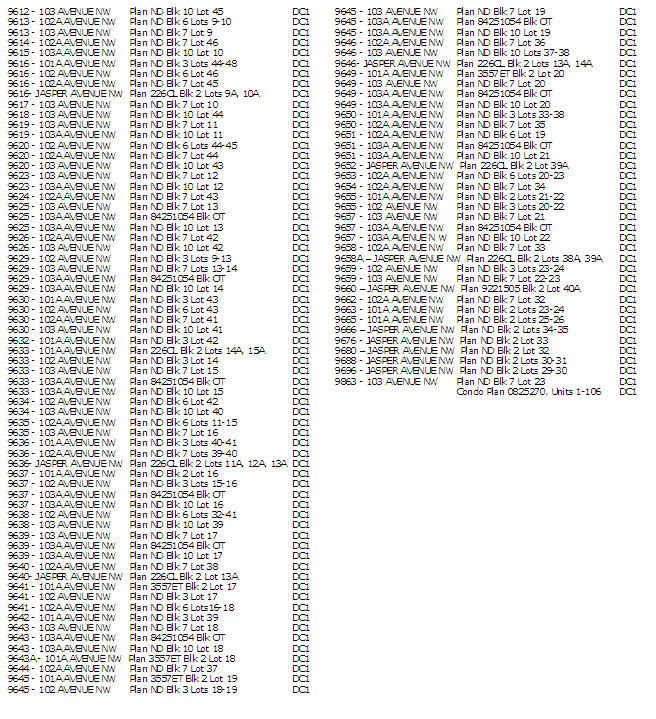
SCHEDULE "B"
SCHEDULE "C"
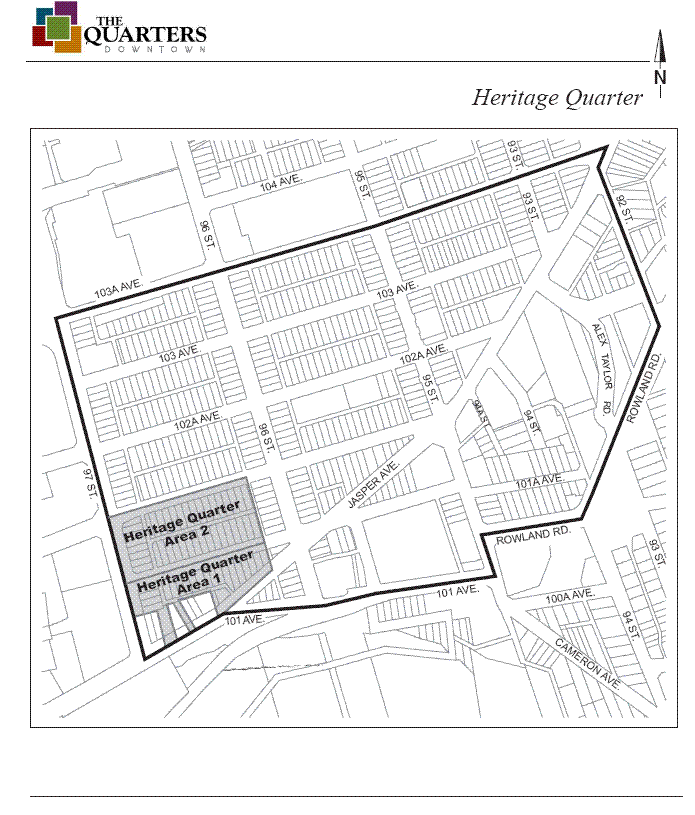
The purpose of this Provision is to preserve and integrate a concentration of Provincially and Municipally designated Historic Resources with new development and two pedestrian priority streets to create mixed use development, with active commercial or residential frontages, that is tourist and pedestrian friendly and compatible in scale, function, built form and design with the historical and architectural character of the area; all in accordance with Section 860 of the Zoning Bylaw, The Quarters Downtown Area Redevelopment Plan, and The Quarters Downtown Urban Design Plan.
This Provision shall apply to the lands as shown on Appendix 1 of Schedule "C".
Apartment Hotels
Apartment Housing
Auctioneering Establishments
Bars and Neighbourhood Pubs, for less than 150 occupants and 180 m2 of Public Space
Boarding and Lodging Houses
Business Support Services
Child Care Services
Commercial Schools
Convenience Retail Stores
General Retail Stores
Government Services
Group Home
Health Services
Hotels
Major Secondhand Stores, limited to the resale of relatively bulky items such as antique or used furniture and major appliances.
Minor Alcohol Sales
Minor Amusement Establishment as an accessory use to a restaurant
Minor Home Based Business
Personal Service Shops
Private Clubs
Professional, Financial and Office Support Services
Protective and Emergency Services
Public Education Services
Public Libraries and Cultural Exhibits
Row housing
Stacked Row Housing
Residential Sales Centres
bb. Restaurants, for less than 200 occupants and 240 m2 of Public Space
cc. Specialty Food Services, for less than 200 occupants and 240 m2 of Public Space
dd. Veterinary Services
ee. Fascia On-premises Signs
ff. Projecting On-premises Signs
gg. Temporary On-premises Signs, limited to project advertising and residential sale purposes only, and excluding trailer mounted signs and/or signs with changeable copy
Area 1
The minimum Building Height shall not be less than 11.0m, nor 3 Storeys.
The maximum Building Height shall not exceed 23.0 m, nor 6 Storeys, subject to Section 860 of the Zoning Bylaw.
The minimum Floor Area Ratio shall be 3.0, subject to Section 860 of the Zoning Bylaw.
The maximum Floor Area Ratio shall be 4.5, subject to Section 860 of the Zoning Bylaw.
Area 2
The minimum Building Height shall not be less than 11.0m, nor 3 Storeys.
The maximum Building Height shall not exceed 50.0 m, nor 15 Storeys, subject to Section 860 of the Zoning Bylaw and Section 810 of the Zoning Bylaw.
The minimum Floor Area Ratio shall be 3.0, subject to Section 860 of the Zoning Bylaw.
The maximum Floor Area Ratio shall be 6.0, subject to Section 860 of the Zoning Bylaw.
General Provisions
Residential and Residential Related Uses shall be located above the ground floor.
Residential Uses shall occupy no less than 33.3% of the Floor Area in new Buildings.
Notwithstanding the Incentive System provided for in Section 860 of the Zoning Bylaw, prior to the issuance of a Development Permit for any base level development, the Development Officer shall ensure a signed agreement exists between the City and the Owner providing the City the option to purchase 5% of the proposed number of residential dwellings at 85% of the market price, OR to address affordable housing contributions as prescribed by City Council policy.
Parking shall be provided in accordance with Section 860 of the Zoning Bylaw.
Signage shall be developed in accordance with Section 860 of the Zoning Bylaw.
Site planning shall be in accordance with The Quarters Downtown Urban Design Plan.
Setbacks
No Building setbacks are required excepting that:
The minimum Building Setback from an abutting laneway in Area 2 shall be 1.5m.
A minimum 3.0 m Setback shall be required from the north-south mid-block pedestrian street.
Additional Building Setbacks may be required where the north-south mid-block pedestrian street intersects Jasper Avenue, or 101A and 102 Avenue to provide visual interest and enhance sightlines to the satisfaction of the Development Officer.
Additional Building Setbacks shall be provided to address sight lines at roadway intersections to the satisfaction of the Transportation Department.
Additional Building Setbacks shall be provided at the discretion of the Development Officer to ensure new development is setback in manner consistent with existing heritage buildings.
Where the ground floor of any development is designed for Residential Uses, the Development Officer may allow a setback for the following purposes:
to allow for staircases to project from the Building wall to the property line, and
to contain a combination of hard and soft landscaping.
Where the ground floor of any development is designed for Commercial Uses, Buildings shall be built to the front and side property lines. The Development Officer may allow a front setback to accommodate street related activities such as sidewalk cafes, architectural features and landscaping.
Building Stepbacks
In Area 1, no Building Stepbacks are required.
In Area 2, no Building Stepbacks are required for Buildings adjacent to Street right-of-ways, or lot lines internal to a block.
In Area 2, a miniumum 3.0 Stepback shall be required for Buildings at approximately 21.0 m of Building height.
In Area 2, a minimum 3.0 Stepback shall be required for Buildings adjacent to the north-south, mid-block pedestrian street at approximately 7.0m and 14.0m of Building height.
Or
In Area 2, a minimum 6.0 m Stepback shall be required for Buildings adjacent to any north-south, mid-block pedestrian street at approximately 11.0 m of Building height.
At the discretion of the Development Officer, stepbacks may be required adjacent to lot lines internal to a block having regard to the character of the surrounding built form, the objectives of The Quarters Downtown Urban Design Plan and Crime Prevention Through Environmental Design principles.
Parking areas shall be developed in accordance with Section 860 of the Zoning Bylaw.
Building Entrances shall be developed in accordance with Section 860 of the Zoning Bylaw.
Weather Protection shall be provided in accordance with Section 860 of the Zoning Bylaw.
Architectural control shall be in accordance with Section 860 of the Zoning Bylaw.
APPENDIX I
SCHEDULE "D"
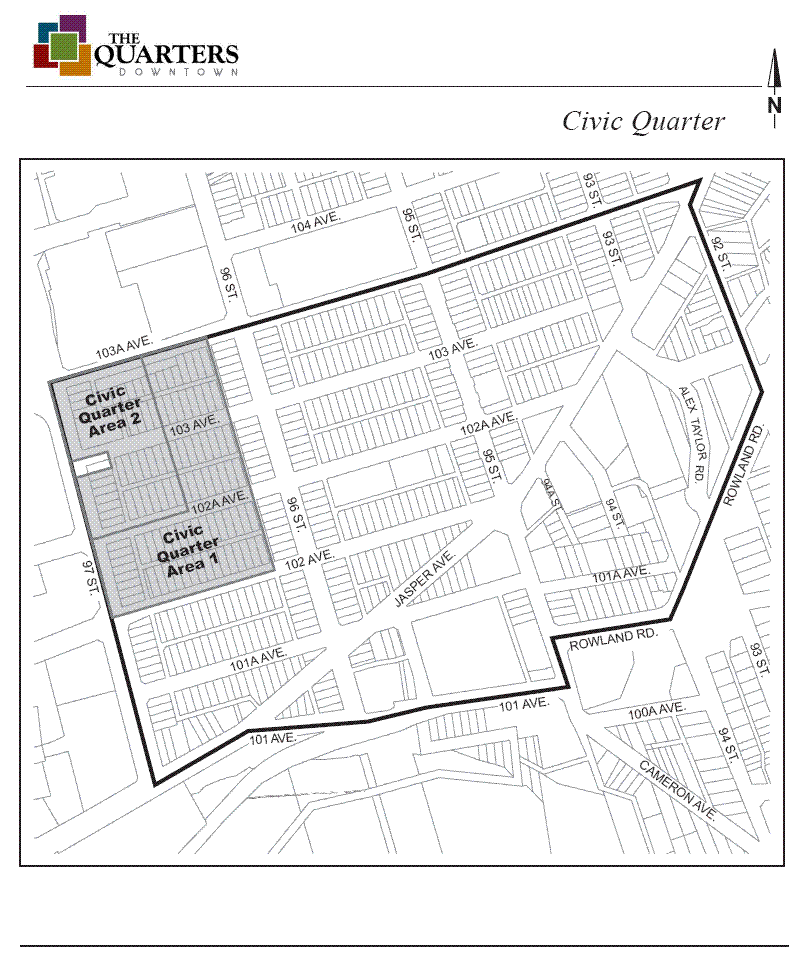
The purpose of this Provision is to accommodate civic uses and mixed-use, medium and high rise development with an active retail frontage along 97 Street that is pedestrian friendly and compatible in scale, function, built form and design with surrounding developments, all in accordance with Section 860 of the Zoning Bylaw, The Quarters Downtown Area Redevelopment Plan and the Quarters Downtown Urban Design Plan.
This Provision shall apply to Area 1 and Area 2 as shown on Appendix I of Schedule "D".
Apartment Hotels
Apartment Housing
Bars and Neighbourhood Pubs, for less than 200 occupants and 240 m2 of Public Space
Boarding and Lodging Houses
Business Support Services
Child Care Services
Commercial Schools
Convenience Retail Stores
Extended Medical Treatment Services
General Retail Stores, for less than 2,100 m2 of Gross Floor Area
Government Services
Group Homes
Health Services
Hotels
Indoor Participant Recreation Services
Minor Alcohol Sales
Minor Amusement Establishment, as an accessory use to a restaurant
Minor Home Based Business
Nightclubs, for less than 200 occupants and 240 m2 of Public Space
Personal Service Shops
Private Clubs
Private Education Services
Professional, Financial and Office Support Services
Projecting On-premises Signs
Protective and Emergency Services
Public Education Services
Public Libraries and Cultural Exhibits
bb. Residential Sales Centres
cc. Restaurants
dd. Row Housing
ee. Stacked Row Housing
ff. Specialty Food Services, for less than 200 occupants and 120 m2 of Public Space
gg. Stacked Row Housing
hh. Veterinary Services
ii. Fascia On-premises Signs
jj. Temporary On-premises Signs, limited to project advertising and residential sale purposes only, and excluding trailer mounted signs and/or signs with changeable copy
Area 1
The minimum Building Height shall not be less than 11.0 m, nor 3 Storeys.
The maximum Building Height shall not exceed 77.0 m, nor 23 Storeys subject to Section 860 of the Zoning Bylaw and Section 810 of the Zoning Bylaw.
The minimum Floor Area Ratio shall be 3.0 subject to Section 860 of the Zoning Bylaw.
The maximum Floor Area Ratio shall be 8.0 subject to Section 860 of the Zoning Bylaw.
Area 2
The minimum Building Height shall not be less than 11.0 m, nor 3 Storeys.
The maximum Building Height shall not exceed 113.0 m, nor 33 Storeys subject to Section 860 of the Zoning Bylaw and Section 810 of the Zoning Bylaw.
The minimum Floor Area Ratio shall be 3.0. subject to Section 860 of the Zoning Bylaw.
The maximum Floor Area Ratio shall be 10.0 subject to Section 860 of the Zoning Bylaw.
General Provisions
The second and the third Storeys of developments located in the areas identified for Commercial Uses may be used exclusively for either Residential Uses or Commercial Uses.
All on-site resident and tenant parking shall be provided within a structure. Visitor and customer Parking may be provided at grade to a maximum of 2 stalls per 10.0 m of site frontage.
The first floor of any frontage, including the associated entranceway, shall have a maximum grade separation of 1.2 m from any abutting public sidewalk.
Developments abutting 97 Street and 103 A Avenue shall make provisions to connect to the underground LRT pedestrian walkways to the satisfaction of the Development Officer in consultation with the Transportation Department.
Notwithstanding the Incentive System provided for in Section 860 of the Zoning Bylaw, prior to the issuance of a Development Permit for any base level development, the Development Officer shall ensure a signed agreement exists between the City and the Owner providing the City the option to purchase 5% of the proposed number of residential dwellings at 85% of the market price, OR to address affordable housing contributions as prescribed by City Council policy.
Parking shall be provided in accordance with Section 860 of the Zoning Bylaw.
Signage shall be provided in accordance with Section 860 of the Zoning Bylaw.
Site Planning shall be addressed in accordance with The Quarters Downtown Urban Design Plan
Setbacks
No Building Setbacks are required excepting that:
A minimum 1.5 m Setback shall be required from an abutting laneway.
A minimum 3.0 m Setback shall be required from north-south mid-block pedestrian street.
Additional Building Setbacks may be required where the north-south mid-block pedestrian street intersects 102, 102A, 103 and/ or 103A Avenues to provide visual interest and enhance sight-lines to the satisfaction of the Development Officer.
No Building setbacks are required from property lines abutting Avenue or Street right-of-ways or from lot lines internal to a block.
Additional Building Setbacks shall be provided to address sight lines at roadway intersections to the satisfaction of the Transportation Department.
Additional Building Setbacks shall be provided at the discretion of the Development Officer to ensure new development is setback in manner consistent with existing heritage buildings.
Where the ground floor of any development is designed for Residential Uses, the Development Officer may allow a setback for the following purposes:
to allow for staircases to project from the Building wall to the property line, and
to contain a combination of hard and soft landscaping.
Where the ground floor of any development is designed for Commercial Uses, Buildings shall be built to the front and side property lines. The Development Officer may allow a front setback to accommodate street related activities such as sidewalk cafes, architectural features and landscaping.
Stepbacks
In Areas 1 and 2, a minimum 3.0m Stepback shall be required for Buildings adjacent to a laneway above approximately 11.0m of Building height.
In Areas 1 and 2, a minimum 3.0 m Stepback shall be required for Buildings adjacent to Avenue or Street right-of-ways at approximately 11.0 m of Building height.
In Areas 1 and 2, two Stepbacks, a minimum of 3.0m each shall be provided for Buildings adjacent to the north-south mid-block pedestrian street at approximately 7.0 m and 14.0 m of Building height.
Or
In Areas 1 and 2, a minimum Stepback of 6.0 m shall be provided for Buildings adjacent to the north-south mid-block pedestrian street at approximately the 11.0 m of Building height.
At the discretion of the Development Officer, stepbacks may be required adjacent to lot lines internal to a block having regard to the character of the surrounding built form, the objectives of The Quarters Downtown Urban Design Plan and Crime Prevention Through Environmental Design principles.
Parking areas shall be developed in accordance with Section 860 of the Zoning Bylaw.
Building Entrances shall be developed in accordance with Section 860 of the Zoning Bylaw.
Weather Protection shall be provided in accordance with Section 860 of the Zoning Bylaw.
Architectural Control shall be in accordance with Section 860 of the Zoning Bylaw.
Appendix I
SCHEDULE "E"
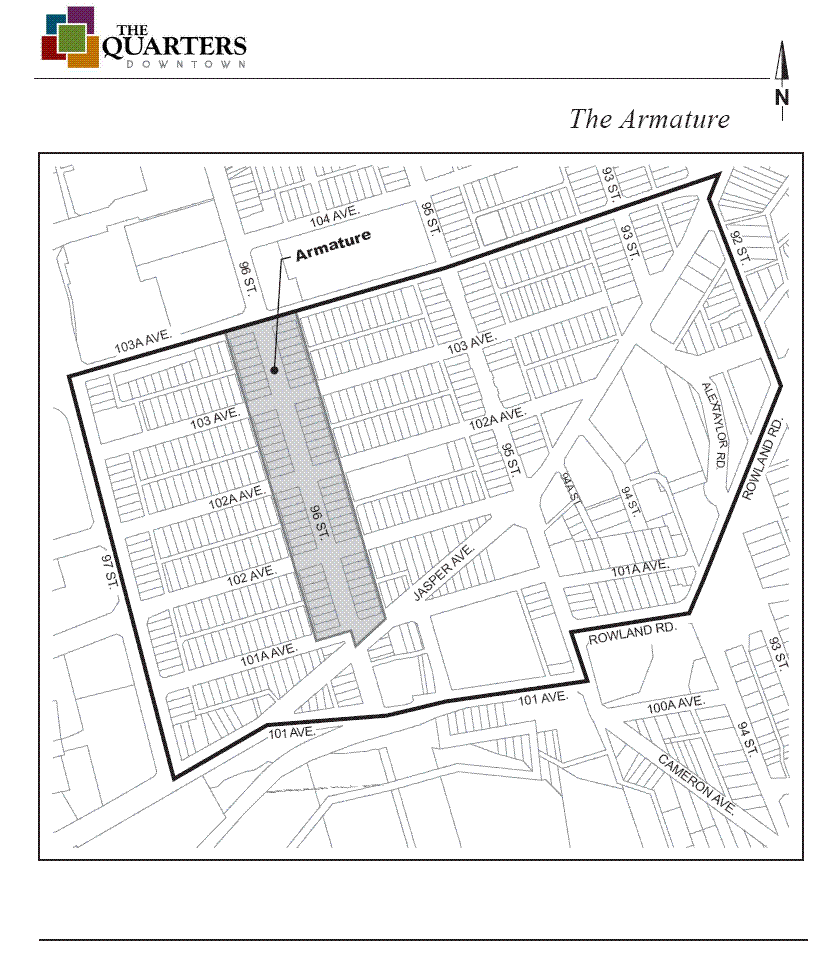
The purpose of this Provision is to accommodate mid-rise, mixed-use, predominately residential development with active retail and residential street frontages that is pedestrian friendly and compatible in scale, function, built form and design with surrounding developments; and open space and/or accessible public assembly space for passive and active use, all in accordance with Section 860 of the Zoning Bylaw, The Quarters Downtown Area Redevelopment Plan and the Quarters Downtown Urban Design Plan.
This Provision shall apply to the lands shown in Appendix I of Schedule "E".
Apartment Housing
Apartment Hotels
Bars and Neighbourhood Pubs, for less than 200 occupants and 240 m2 of Public Space
Boarding and Lodging Houses, on a Site which does not isolate another Site within this Zone of less than 800 m2
Business Support Services
Child Care Services
Commercial Schools
Community Recreation Services
Convenience Retail Stores
Custom Manufacturing Establishments
Equipment Rentals, within an enclosed building
General Retail Stores, for less than 750 m2 of Gross Floor Area
Health Services
Hotels
Household Repair Services
Indoor Participant Recreation Services
Limited Group Homes
Live-Work Unit
Minor Alcohol Sales
Minor Amusement Establishment, as an accessory use to a restaurant
Minor Home Based Business
Personal Service Shops
Professional, Financial and Office Support Services
Public Libraries and Cultural Events
Residential Sales Centres
Restaurants, for less than 200 occupants and 240 m2 of Public Space
Specialty Food Services, for less than 150 occupants and 75 m2 of Public Space
bb. Stacked Row Housing including Row Housing but excluding Semi-detached and Duplex Housing on a Site of 1.0 ha or less, which does not isolate another Site within this Zone of less than 800 m2
cc. Veterinary Services
dd. Fascia On-premises Signs
ee. Projecting On-premises Signs
ff. Temporary On-premises Signs, limited to project advertising and residential sale purposes only, and excluding trailer mounted signs and/or signs with changeable copy
The minimum Building Height shall not be less than 11.0m, nor 3 Storeys.
The maximum Building Height shall not exceed 23.0m, nor 6 Storeys, subject to Section 860 of the Zoning Bylaw
The minimum Floor Area Ratio shall be 3.0 subject to Section 860 of the Zoning Bylaw
The maximum Floor Area Ratio shall be 4.5 subject to Section 860 of the Zoning Bylaw
The first floor of any frontage, including the associated entranceway, shall have a maximum grade separation of 1.2 m from any abutting public sidewalk.
All Commercial Uses shall be limited to the first two Storeys of the development.
Notwithstanding the Incentive System provided for in Section 860 of the Zoning Bylaw, prior to the issuance of a Development Permit for any base level development, the Development Officer shall ensure a signed agreement exists between the City and the Owner providing the City the option to purchase 5% of the proposed number of residential dwellings at 85% of the market price, OR to address affordable housing contributions as prescribed by City Council policy.
Residential Uses shall occupy no less than 33.3% of the Floor Area in new Buildings.
Parking shall be provided in accordance with Section 860 of the Zoning Bylaw
Signage shall be provided in accordance with Section 860 of the Zoning Bylaw
Site Planning shall be in accordance with The Quarters Downtown Urban Design Plan.
Setbacks
East of 96 Street, no Building setbacks are required.
West of 96 Street, no Setback are required except a minimum 1.0 m Setback shall be required for each Storey of Building height from the rear laneway property line.
Stepbacks
No Stepbacks are required for Buildings adjacent to Avenues.
For Buildings adjacent to the east side of 96 Street, a minimum 3.0 m Stepback shall be provided at approximately 7.0m OR 11.0m Building height.
For Buildings adjacent to the west side of 96 Street, two Stepbacks, a minimum 3.0 m each shall be provided at approximately 7.0 m and 14.0 m of Building height.
For Buildings adjacent to the laneway west of 96 Street, a Stepback may be required at approximately 11.0 m of Building height.
At the discretion of the Development Officer, Stepbacks may be required adjacent to lot lines internal to a block having regard to the character of the surrounding built form, the objectives of The Quarters Downtown Urban Design Plan and Crime Prevention Through Environmental Design principles.
Building Entrances shall be developed in accordance with Section 860 of the Zoning Bylaw.
Weather Protection shall be provided in accordance with Section 860 of the Zoning Bylaw.
Architectural Control shall be in accordance with Section 860 of the Zoning Bylaw.
APPENDIX I
SCHEDULE "F"
(DC1) DIRECT DEVELOPMENT CONTROL PROVISION
(MQ) McCAULEY QUARTER AREA 2
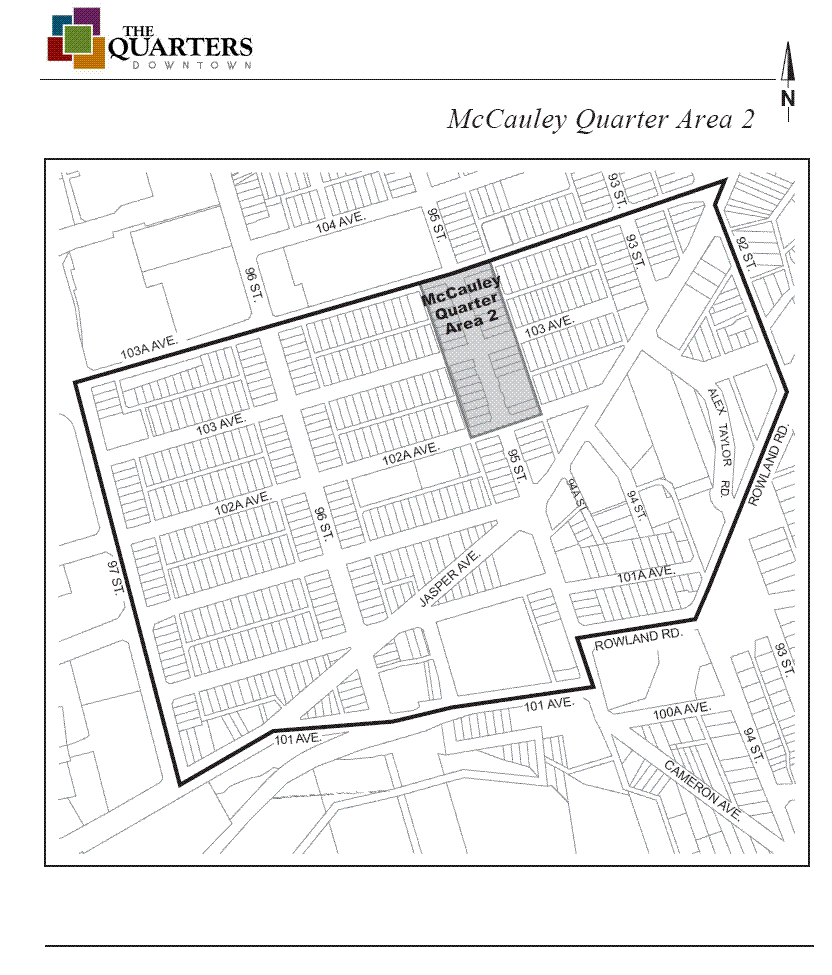
The purpose of this Provision is to accommodate a mix of low to medium density residential and local commercial development that is pedestrian friendly and compatible in scale, function, built form and urban design with surrounding developments; all in accordance with Section 860 of the Zoning Bylaw, The Quarters Downtown Area Redevelopment Plan and The Quarters Downtown Urban Design Plan.
This Provision shall apply to the lands as shown in Appendix I of Schedule "F".
Apartment Housing
Boarding and Lodging Houses
Business Support Services
Child Care Services
Commercial Schools
Community Recreation Services
Convenience Retail Stores
Custom Manufacturing Establishments
Equipment Rentals, within an enclosed building
General Retail Stores, for less than 750 m2 of Gross Floor Area
Live-Work Unit
Health Services
Household Repair Services
Limited Contractor Services
Limited Group Homes
Minor Amusement Establishment, as an accessory use to a restaurant
Minor Home Based Business
Personal Service Shops
Professional, Financial and Office Support Services
Projecting On-premises Signs
Religious Assembly
Residential Sales Centres
Restaurants, for less than maximum seating of 200 occupants and 240 m2 of Public Space
Specialty Food Services, for less than maximum seating of 150 occupants and 75 m2 of Public Space
Stacked Row Housing including Row Housing, Semi-detached and Duplex Housing, on a Site of 0.5 ha or less, which does not isolate another Site within this Zone of less than 500 m2
Veterinary Services
Fascia On-premises Signs
bb. Freestanding Signs, limited to neighbourhood identification signage as specified in Section 59B
cc. Temporary On-premises Signs, limited to project advertising and residential sale purposes only, and excluding trailer mounted signs and/or signs with changeable copy
The minimum Building Height shall be no less than 7.0m, nor 2 Storeys.
The maximum Building Height shall not exceed 23.0m, nor 6 Storeys,, subject to Section 860 of the Zoning Bylaw.
The minimum Floor Area Ratio shall be 2.0, subject to Section 860 of the Zoning Bylaw.
The maximum Floor Area Ratio shall be 3.5, subject to Section 860 of the Zoning Bylaw.
Residential Uses shall occupy no less than 50% of the Floor Area in new Buildings.
Notwithstanding the Incentive System provided for in Section 860 of the Zoning Bylaw, prior to the issuance of a Development Permit for any base level development, the Development Officer shall ensure a signed agreement exists between the City and the Owner providing the City the option to purchase 5% of the proposed number of residential dwellings at 85% of the market price, OR to address affordable housing contributions as prescribed by City Council policy.
Parking shall be provided in accordance with Section 860 of the Zoning Bylaw.
Signage shall be developed in accordance with Section 860 of the Zoning Bylaw.
Site Planning shall be in accordance with The Quarters Downtown Urban Design Plan.
Setbacks
A minimum 1.0 m setback for each Storey of Building height shall be required from any rear laneway property line.
No Building setbacks are required from property lines adjacent to Avenue right-of-ways or from lot lines internal to a block.
Development shall be built to the front property line that is furthest from the centre line of 95 Street. The ”build-to” line shall be consistent with the property line furthest from the Right-Of-Way.
Setbacks to reflect neighbouring built form are encouraged and may be applied at the discretion of the Development Officer.
Additional Building Setbacks shall be required to address sight lines at roadway intersections to the satisfaction of the Transportation Department.
Where the ground floor of any development is designed for Residential Uses, the Development Officer may allow a front setback to allow for staircases to project from the Building wall to the property line.
Where the ground floor of any development is designed for Commercial Uses, Buildings shall be built to the front and side property lines. The Development Officer may allow a front setback be applied to accommodate street related activities such as sidewalk cafes, architectural features and landscaping.
Stepbacks
Two Stepbacks, a minimum of 3.0m each shall be provided for Buildings 7.0 m to 14.0 m in height adjacent to 95 Street above approximately 7.0 m Building height.
At the discretion of the Development Officer, Stepbacks may be required adjacent to lot lines internal to a block having regard to the character of the surrounding built form, the objectives of The Quarters Downtown Urban Design Plan and Crime Prevention Through Environmental Design principles.
Parking areas shall be developed in accordance with Section 860 of the Zoning Bylaw.
Building Entrances shall be developed in accordance with Section 860 of the Zoning Bylaw.
Weather Protection shall be provided in accordance with Section 860 of the Zoning Bylaw.
Architectural control shall be in accordance with Section 860 of the Zoning Bylaw.
APPENDIX I
SCHEDULE "G"
(DC1) DIRECT DEVELOPMENT CONTROL PROVISION
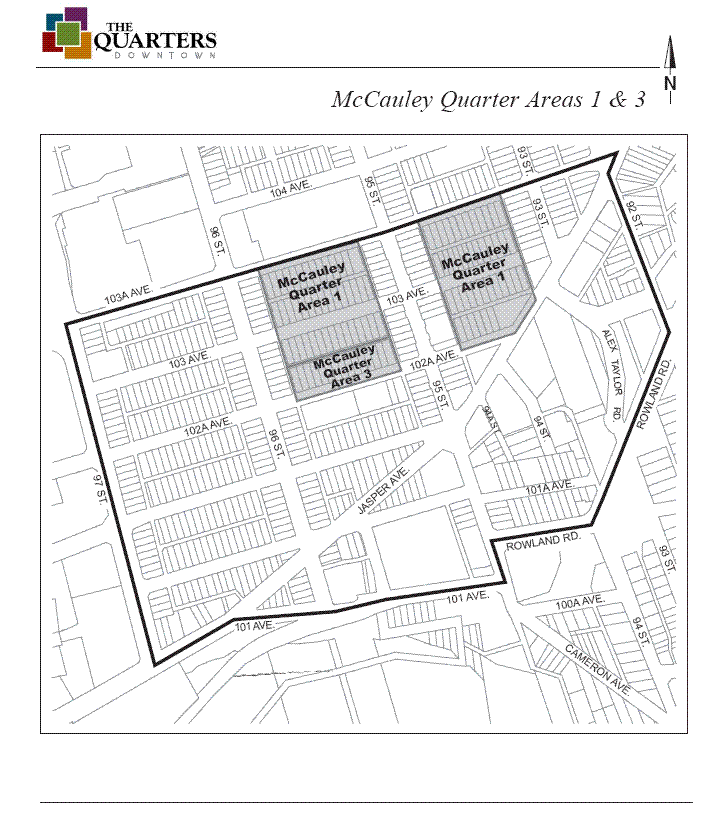
(MQ) McCAULEY QUARTER AREAS 1 & 3
The purpose of this Provision is to accommodate low to medium density residential development in a mix of built forms that is pedestrian friendly and compatible in scale, function, built form, urban design with surrounding developments; all in accordance with Section 860 of the Zoning Bylaw, The Quarters Downtown Area Redevelopment Plan and the Quarters Downtown Urban Design Plan.
This Provision shall apply to the lands shown on Appendix 1 of Schedule "G".
Apartment Housing, which is located on a Site that does not isolate another Site within this Zone of less than 500 m2 .
Boarding and Lodging Houses, which is located on a Site that does not isolate another Site within this Zone of less than 500 m2
Child Care Services
Professional, Financial and Office and Support Services where such use is located in a converted Single Detached, Semi-detached and Duplex Dwellings
Garage Suites, where developed on a lot occupied by a Single Detached Housing at the time this Provision was adopted
Group Homes
Limited Group Homes
Live-Work Unit
Major Home Based Business
Minor Home Based Business
Personal Service Shops and Convenience Retail Stores, in locations identified in The Quarters Downtown Overlay
Religious Assembly
Residential Sales Centre
Row Housing, excluding Semi-detached and Duplex Housing, which does not isolate another Site within this Zone of less than 500 m2
Secondary Suites, where developed within existing Single Detached Housing at the time this Provision was adopted
Single Detached Housing, where existing at the time this Provision was adopted
Stacked Row Housing, which does not isolate another Site within this Zone of less than 500 m2
Fascia On-premises Signs
Freestanding Signs, limited to neighbourhood identification signage as specified in Section 59B-1.2
Projecting On-premises Signs
Temporary On-premises Signs, limited to project advertising and residential sale purposes only, and excluding trailer mounted signs and/or signs with changeable copy
Area 1
The maximum Building Height shall not exceed 23.0m, nor 6 Storeys subject to Section 860.5 of the Zoning Bylaw.
The minimum Floor Area Ratio shall be 1.5, subject to Section 860 of the Zoning Bylaw.
The maximum Floor Area Ratio shall be 3.5, subject to Section 860 of the Zoning Bylaw.
Area 3
The maximum Building Height shall not exceed 27.0m, nor 8 Storeys subject to Section 860.5 of the Zoning Bylaw.
The minimum Floor Area Ratio shall be 1.5, subject to Section 860 of the Zoning Bylaw.
The maximum Floor Area Ratio shall be 4.0, subject to Section 860 of the Zoning Bylaw.
General Provisions
The minimum Building Height shall not be less than 7.0 m, nor 2 Storeys.
Residential Uses shall occupy no less than 50% of the Floor Area in new Buildings.
Notwithstanding the Incentive System provided for in Section 860 of the Zoning Bylaw, prior to the issuance of a Development Permit for any base level development, the Development Officer shall ensure a signed agreement exists between the City and the Owner providing the City the option to purchase 5% of the proposed number of residential dwellings at 85% of the market price, OR to address affordable housing contributions as prescribed by City Council policy.
Parking shall be provided in accordance with Section 860 of the Zoning Bylaw.
Signage shall be applied in accordance with Section 860 of the Zoning Bylaw.
Site Planning shall be in accordance with The Quarters Downtown Urban Design Plan Section 860 of the Zoning Bylaw.
Setbacks
A minimum 3.0 m setback shall be required from the front property line abutting the Avenue road right-of-way.
A minimum 7.5m setback shall be required from the rear lot line for the principle structure and a 2.75m setback shall be required from the rear lot line for a detached garage.
A minimum 1.2 m to 3.0 m setback shall be required from side lot lines including those abutting a laneway based on the following:
For Sites 370m2 of less, the minimum Setback shall be 1.2 m from the side lot line;
For Sites greater than 370m2 and less than 740 m2, the minimum Setback shall be 2.1 m from the side lot line; and
For Sites greater than 740 m2, the minimum Setback shall be 3.0 m from the side lot line.
Additional Building Setbacks shall be provided to address sight lines at roadway intersections to the satisfaction of the Transportation Department.
Where the ground floor of any development is designed for Residential Uses, the front setback area shall contain a combination of hard and soft landscaping.
Where the ground floor of any development is designed for Residential Uses and is setback from the property line, the Development Officer may allow one Storey features, such as bay windows, front porches, and staircases to project from the Building wall to the property line, provided the area where the feature is projecting is landscaped.
Stepbacks
In Area 1, no Building Stepbacks are required.
In Area 3, a minimum 3.0m Stepback shall be required for Buildings adjacent to an east/west laneway above approximately 7.0 m of Building Height.
In Area 3, a minimum 3.0 m Stepback shall be required adjacent to the Avenue above approximately 7.0 m of Building height. No Building Stepbacks are required from any lot lines internal to a block in Area 3.
At the discretion of the Development Officer, Stepbacks may be required from lot lines internal to a block having regard to the character of the surrounding built form, the objectives of The Quarters Downtown Urban Design Plan and Crime Prevention Through Environmental Design principles.
Fences along the primary frontage shall not exceed 1.2 m.
Parking areas shall be developed in accordance with Section 860 of the Zoning Bylaw.
Building Entrances shall be developed in accordance with Section 860 of the Zoning Bylaw.
Weather Protection shall be developed in accordance with Section 860 of the Zoning Bylaw.
Built forms shall be developed in accordance with Section 860 of the Zoning Bylaw.
APPENDIX I
SCHEDULE "H"
(DC1) DIRECT DEVELOPMENT CONTROL PROVISION
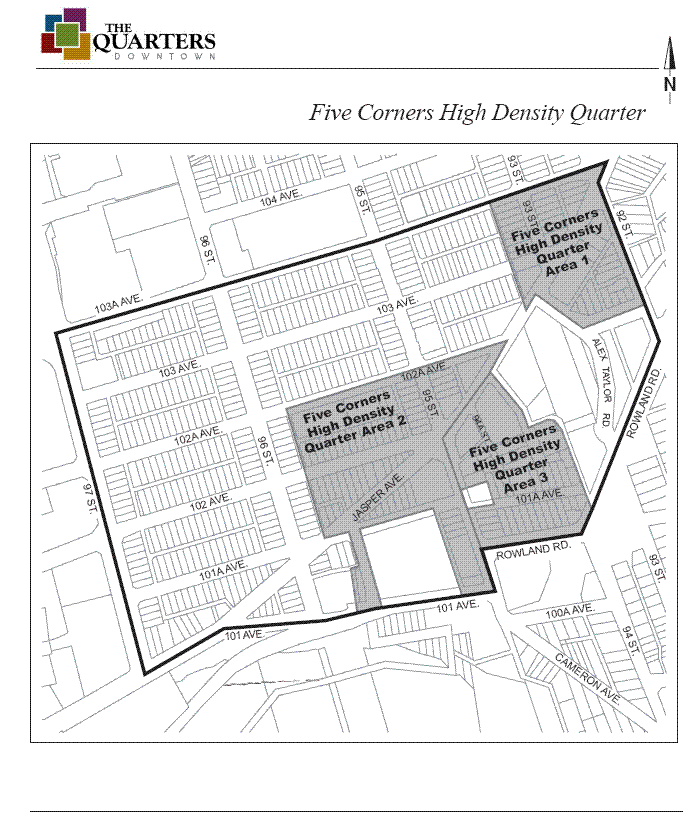
(FQ) FIVE CORNERS HIGH DENSITY QUARTER
The purpose of this Provision is to accommodate a predominately high-rise, high density residential and ground oriented commercial development that is pedestrian friendly and compatible in scale, function, built form and urban design with surrounding developments; all in accordance with Section 860 of the Zoning Bylaw, The Quarters Downtown Area Redevelopment Plan and The Quarters Downtown Urban Design Plan.
This Provision shall apply to the lands shown on Appendix I of Schedule "H".
Area 1
Apartment Hotels
Apartment Housing
Bars and Neighbourhood Pubs, for less than 100 occupants and 120 m2 of Public Space
Boarding and Lodging Houses
Child Care Services
Garage Suites, where developed on a lot occupied by Single Detached Housing at the time this Provision was adopted
Minor Home Based Business
Private Education Services
Residential Sales Centres
Single Detached Housing, where existing at the time this Provision was adopted
Stacked Row Housing, combined with other permitted uses
Temporary On-premises Signs, limited to project advertising and residential sale purposes only, and excluding trailer mounted signs and/or signs with changeable copy
Secondary Suites, where developed within existing Single Detached Housing at the time this Provision was adopted.
Area 2 and Area 3
All uses in Area 1
Boarding and Lodging Houses
Broadcasting and Motion Picture Studios
Business Support Services
Commercial Schools
Convenience Retail Stores
Extended Medical Treatment Services
General Retail Stores
Health Services
Hotels
Indoor Participant Recreation Services
Major Secondhand Stores, limited to the resale of relatively bulky items such as antique or used furniture and major appliances
Minor Alcohol Sales
Minor Amusement Establishment, as an accessory use to a restaurant
Nightclubs
Personal Service Shops
Private Clubs
Professional, Financial and Office Support Services
Protective and Emergency Services
Public Education Services
Public Libraries and Cultural Exhibits
Religious Assembly
Residential Sales Centre
Row Housing
Stacked Row Housing
Restaurants, for less than 100 occupants and 120 m2 of Public Space
Specialty Food Services, for less than 100 occupants and 150 m2 of Public Space
bb. Veterinary Services
cc. Fascia On-premises Signs
dd. Projecting On-premises Signs
Area 1
The minimum Building Height shall not be less than 11.0 m, nor 3 Storeys.
The maximum Building Height shall not exceed 85.0 m, nor 28 Storeys, subject to Section 860 of the Zoning Bylaw.
The minimum Floor Area Ratio shall be 3.0, subject to Section 860 of the Zoning Bylaw. The maximum Floor Area Ratio shall be 8.0, subject to Section 860 of the Zoning Bylaw.
Area 2
The minimum Building Height shall not be less than 11.0m, nor 3 Storeys.
The maximum Building Height shall not exceed 85.0m, nor 28 Storeys, subject to Section 860 of the Zoning Bylaw and Section 810 of the Zoning Bylaw.
The minimum Floor Area Ratio shall be 3.0, subject to Section 860 of the Zoning Bylaw.
The maximum Floor Area Ratio shall be 8.0, subject to Section 860 of the Zoning Bylaw.
Area 3
The minimum Building Height shall not be less than 11.0m, nor 3 Storeys.
The maximum Building Height shall not exceed 150.0m, nor 45 Storeys, subject to Section 860 of the Zoning Bylaw and Section 810 of the Zoning Bylaw.
The minimum Floor Area Ratio shall be 3.0. subject to Section 860 of the Zoning Bylaw.
The maximum Floor Area Ratio shall be 11.0, subject to Section 860 of the Zoning Bylaw.
General Provisions
The minimum Site Area shall be 600 m2; excepting that the minimum Site Area for a tower is 860 m2.
The second and third Storeys of developments located in the areas identified for Commercial Uses may be used exclusively for either Residential Uses or Commercial Uses.
Residential Uses shall occupy no less than 33.3% of the Floor Area in new Buildings.
For Areas 2 and 3, all on-site resident and tenant parking shall be provided within a structure. Visitor and customer Parking may be provided at grade to a maximum of 2 stalls per 10.0 m of site frontage.
Notwithstanding the Incentive System provided for in Section 860 of the Zoning Bylaw, prior to the issuance of a Development Permit for any base level development, the Development Officer shall ensure a signed agreement exists between the City and the Owner providing the City the option to purchase 5% of the proposed number of residential dwellings at 85% of the market price, OR to address affordable housing contributions as prescribed by City Council policy.
Parking shall be provided in accordance with Section 860 of the Zoning Bylaw.
Signage shall be developed in accordance with Section 860 of the Zoning Bylaw.
Site Planning shall be in accordance with The Quarters Downtown Urban Design Plan.
In Area 1, a minimum 4.5 m Setback shall be required from any laneway property line, except for entrances to underground parkades.
In Area 1, a minimum 1.0 m Setback shall be required from lot lines internal to a block for every Storey of Buildings up to 6 Storeys in height. A minimum 7.5 m Setback shall be required from lot lines internal to a block for Buildings greater than 6 storeys in height.
In Areas 2 and 3, a minimum 1.5 m Setback shall be required from any laneway property line, except for entrances to underground parkades.
In Areas 1 and 2, additional Building Setbacks shall be provided at the discretion of the Development Officer to ensure new development is setback in manner consistent with existing heritage buildings.
Buildings at the intersection of Jasper Avenue, 95 Street and 102 Avenue shall be Setback to form a circular to the satisfaction of the Development Officer as follows:
The first 8.0 m (2 floors) of every Building at the intersection of Jasper Avenue and 95 Street shall be Setback a minimum of 35.0 m from where the centrelines of Jasper Avenue and 95 Street intersect to form circular arcade; and
Building facades, above the first 8.0 m (two floors) shall be setback a minimum of 30.0 m form where the centrelines of Jasper Avenue and 95 Street intersect to form sculpted arced building facades to frame this intersection.
Additional Building Setbacks shall be provided to address sight lines at roadway intersections to the satisfaction of the Transportation Department.
Where the ground floor of any development is designed for Commercial Uses, Buildings shall be built to the front and side property lines. The Development Officer may allow a front setback to accommodate street related activities such as sidewalk cafes, architectural features and landscaping.
Stepbacks
In Area 1, no Stepbacks are required.
In Area 2 and 3, no Stepbacks are required adjacent to Streets and Avenues.
In Areas 2 and 3, a minimum 3.0 m Stepback shall be required for towers adjacent to laneways at approximately 11.0 m of Building height.
In Areas 2 and 3, a minimum 7.5 m Stepback shall be required for towers adjacent to internal lot lines at approximately 11.0 m of Building height.
At the discretion of the Development Officer, Stepbacks may be required adjacent to lot lines internal to a block having regard to the character of the surrounding built form, the objectives of The Quarters Downtown Urban Design Plan, and Crime Prevention Through Environmental Design principles.
Parking areas shall be developed in accordance with Section 860 of the Zoning Bylaw.
Building Entrances shall be developed in accordance with Section 860 of the Zoning Bylaw.
Weather Protection shall be provided in accordance with Section 860 of the Zoning Bylaw.
Architectural Control shall be in accordance with Section 860 of the Zoning Bylaw.
Appendix I
SCHEDULE "I"
DC1 (Area 2) Jasper East Area Direct Development Control District
(Section 710, Land Use Bylaw)
To provide a Direct Development Control District to preserve and enhance a special heritage area comprised of historic, civic and cultural elements while permitting a wide range of general business commercial and residential opportunities. The District supports the adaptive reuse of historic buildings and provides guidelines for sympathetic infill development along Jasper Avenue and 97 Street. The District also creates a pedestrian-oriented linkage between major developments in the Downtown and the Chinatown areas in order to achieve the intent of Section 7.2.6 of the Boyle Street/McCauley Area Redevelopment Plan.
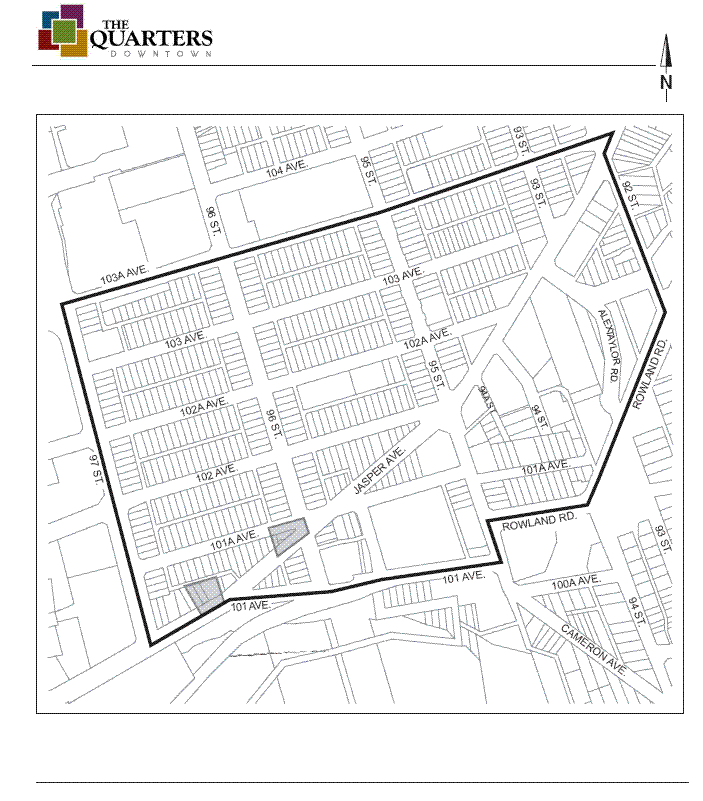
This Provision shall apply to the lands as shown in Appendix I of Schedule "I".
The following uses are prescribed for lands designated DC1 (Area 2) Sub-Area 1 pursuant to Section 710.3 of the Land Use Bylaw.
Alcohol Sales, Minor
Amusement Establishments, Major and Minor
Apartment Hotels
Apartment Housing
Boarding and Lodging Houses
Broadcasting and Motion Picture Studios
Business Support Services
Carnivals
Child Care Services
Commercial Schools
Custom Manufacturing Establishments
Eating and Drinking Establishments, Major and Minor
Exhibition and Convention Facilities
Government Services
Group Homes
Health Services
Home Occupation, Major and Minor
Hotel
Household Repair Services
Indoor Participant Recreation Services
Limited Group Homes
Non-accessory Parking
Personal Service Shops
Private Clubs
Private Education Services
Professional Offices
Professional, Financial and Office Support Services
bb. Public Education Services
cc. Public Libraries and Cultural Exhibits
dd. Recycled Materials Drop-off Centre
ee. Religious Assembly
ff. Residential Sales Centres
gg. Retail Stores, Convenience
hh. Retail Stores, General
ii. Secondhand Stores, Major and Minor
jj. Spectator Entertainment Establishments
kk. Temporary Shelter Services
The following development criteria shall apply to the prescribed uses pursuant to Section 710.4 of the Land Use Bylaw.
All development in this district shall meet the requirements established herein and where not superseded by the development criteria, design guidelines and sign regulations of this District, to the satisfaction of the Development Officer in consultation of the Heritage Planner, in accordance with the regulations contained in the Land Use Bylaw No. 5996, as amended and the objectives set out in the Boyle Street/McCauley Area Redevelopment Plan, as amended.
The maximum floor area ratio shall be 4.0.
The maximum building height shall not exceed 14 m (45.9 ft.) nor 4 storeys.
Buildings shall be built to the front property line abutting a public roadway.
Buildings shall be built to the side property lines.
Buildings shall be built to the rear property line except for providing parking and/or loading and unloading facilities, in which case the rear setback shall be according to Section 65.4 and Section 66.3 of the Land Use Bylaw.
Development Criteria for Apartment Housing:
Apartment Housing shall be permitted only in buildings where the first storey is used for commercial purposes;
the housing component shall have access at grade which is separate from the access for the commercial premises;
the maximum residential density shall be:
370 dwellings/ha (150 dwellings/acre) for any site less than 1,350 m2 (14,53 1 sq. ft.); or
500 dwellings/ha (202 dwellings/acre) for any site of 1,350 m2 (14,53 1 sq. ft.) or greater; or
200 dwellings/ha (81 dwellings/acre) for any site less than 885 m2 (9,526 sq. ft.); and
where a development contains two or more dwelling units, a minimum of 7.5 m2 (80.7 sq. ft.) of Amenity Area is required per unit, in accordance with the provisions of Section 56 of the Land Use Bylaw.
A minimum Amenity Area of 4% of the non-residential gross floor area shall be provided and for non-residential development greater than 1,852 m2 (20,000 sq. ft.).
Loading, storage and trash collection areas shall be located to the rear of the principal building and shall be screened from view from any adjacent sites, public roadways in accordance with the provisions of subsection 69.4 of the Land Use Bylaw.
Off-street parking for new development shall be provided in accordance with the schedule listed below:
For Apartment Housing and Apartment Hotels:
0.5 parking spaces per bed-sitting room Dwelling, 0.75 parking space per 1 bedroom Dwelling, 1 parking space per 2 bedroom Dwelling or larger.
Of the total number required, 1 guest parking space per every 7 Dwelling must be readily available to an entrance of the building to be served, and must be clearly identified as guest parking.
For Non-residential Use Classes:
1 space per 300 m2 (1 per 3,229 sq. ft.) of gross floor area; notwithstanding this minimum, the maximum shall be 1 space per 100 m2 (1 per 1,076 sq. ft.) of gross floor area.
Off-street parking for existing building, including renovation and rehabilitation projects, will only be required to maintain existing parking on-site.
Accessory parking shall be located at the rear of the building and access to the parking shall be restricted to the rear lane.
Vehicular access to properties shall be from the rear lanes to maintain an uninterrupted breaks in the street facade and strengthen the historic character of the district. Where there is no rear lane, vehicular access shall be from l0lA Avenue. There shall be no vehicular access from Jasper Avenue or 97 Street.
Off-street vehicular loading and unloading spaces for new development shall be provided in accordance with Section 65 of the Land Use Bylaw, as amended where development occurs.
Off-street vehicular loading and unloading spaces for existing building, including renovation and rehabilitation projects, will only required to maintain existing off-street loading and unloading facilities.
Development Criteria for Non-accessory Surface Parking:
Non-accessory Surface Parking lots shall provide a minimum 2 m (6.6 ft.) landscaped setback from any property line abutting a public roadway and lane in addition to the landscaping requirements as per Section 69 of the Land Use Bylaw to the satisfaction of the Development Officer;
storage materials and the piling of snow on Non-accessory Surface Parking lots shall be in a location away from the public roadway to improve safety and visibility to the satisfaction of the Development Officer; and
Non-accessory Surface Parking lots shall be provided to the satisfaction of the Development Officer in accordance with CPTED (Crime Prevention Through Environmental Design) principles, as identified in Section 77 of the Land Use Bylaw.
Architectural design guidelines for infill development along Jasper Avenue and 97 Street:
development which incorporates or is adjacent to historic buildings along Jasper Avenue and 97 Street should be designed in a complementary manner and in accordance with conservation principles and practices with regard to addition/alterations to historic buildings.
Any new development must relate to the following elements of adjacent historic buildings, as illustrated in Appendix 2:
building façade and design elements, e.g. horizontal elements, vertical design elements, rhythm of window openings, pilasters and other design elements on both the ground and upper storeys;
building materials (type, colour and texture); and
architectural detailing.
Development Criteria for Signs along Jasper Avenue and 97 Street:
development which incorporates or is adjacent to historic buildings along Jasper Avenue and 97 Street should be designed in a complementary manner that, as much as is practicable, follow the traditional pattern and location of signs, as illustrated in Appendix 3;
a Comprehensive Sign Design Plan in accordance with Section 79.6 of the Land Use Bylaw showing the sign and the complete facade of the building on which the sign shall be located shall be prepared for the development and submitted with the development or sign permit application to be approved by the Development Officer in consultation with the Heritage Planner;
maximum amount of signage and signage by type will be determined by building frontage;
signs permitted shall include Fascia Signs, Projecting Signs, Signs under Awnings or Canopies, Window Signs, and Signs on Awnings;
Painted Wall Signs are NOT permitted on all facades of a building except where a painted wall sign is already existed. Such painted wall signs shall only be allowed to be maintained; and
Signs not permitted include scintillating, flashing, animated, rotating and balloon signs and billboards.
Development in this District shall be evaluated with respect to compliance with the General Development Regulations of Sections 50 to 79 inclusive of the Land Use Bylaw and in accordance with conservation principles and practices as it pertains to historic buildings.
The Development Officer, in consultation with the Heritage Planner, may grant relaxation to Section 50 to 79 of the Land Use Bylaw, if in his opinion, such a variance would be in keeping with the general purpose of this District and the objectives of Section 7.2.6 of the Boyle Street/McCauley Area Redevelopment Plan, as amended and would not affect the amenities, use and enjoyment of the neighbouring properties.
Development in this District shall be evaluated with respect to compliance with the Special Land Use Provisions of Sections 80 to 102 inclusive of the Land Use Bylaw and in accordance with conservation principles and practices as it pertains to historic buildings.
APPENDIX I
Building Façade and Design Elements
Horizontal Elements:
New construction shall respect and enhance horizontal alignments where feasible;
Vertical Elements:
Major vertical elements shall be introduced into the facade design of new buildings at approximately 33-foot intervals to maintain the traditional vertical pattern of building facade design;
Awnings:
The original, traditional awnings found in Jasper East Area were 3 or 4 point retractable awnings with a skirt or valance;
New awnings shall have the traditional profile and may be fixed or retractable with a skirt (valance) utilizing canvas or material similar in nature;
New awnings shall provide weather protection for pedestrians with a minimum projection of 1.5 m (5.0 ft.) and not exceeding 2.0 m (6.6 ft.) from the building face;
Backlit or bubble awnings and awnings are not permitted;
New awnings shall be mounted between the wood or masonry piers which frame the storefront and shall align horizontally (where structurally possible) with neighbouring awnings;
Rhythm of window openings, pilasters and other design elements on both the ground and upper storeys:
The historic building facades in Jasper East Area have the following features:
Storefronts and entrances should incorporate the historic pattern of recessed entryways
Transom glazing and large display windows with minimum partitioning at eye level. Windowsills shall be between 30 cm (1.0 ft.) and 45 cm (1.5 ft.) above the level of the sidewalk and allow for a bulkhead panel below.
Upper Storey Window openings shall be of "punched" design, vertically proportioned (1:2 - width:height). Horizontal strip, awning and horizontal sliders are prohibited,
Transom glazing over doors and storefronts, fascia sign bands, and strong cornices and belt courses.
Building Materials (type, colour and texture)
The traditional, historic building materials in Jasper East Area were quite limited. They included: brick, wood, pressed cornices metal and cast stone. New construction shall emphasize the use of these traditional materials. Reflective glass windows are NOT permitted;
Colour schemes appropriate to the era of Jasper East Area’s building’s are recommended.
Architectural Detailing:
Decorative details and facade articulations shall respect or make continuous, the horizontal features of adjacent historic buildings;
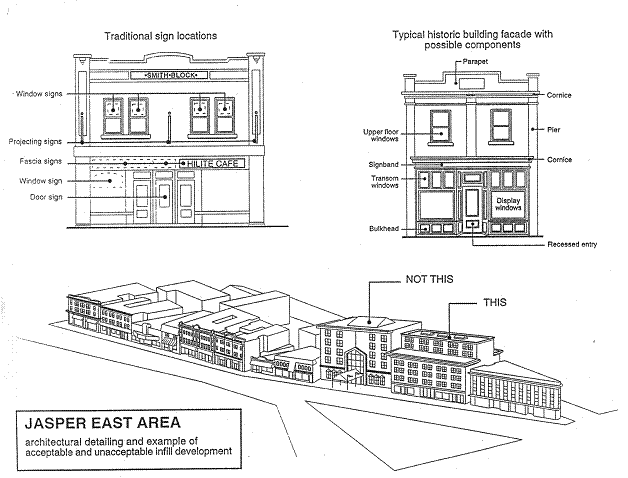
Signage can have a dramatic impact on the overall character of a historic district. As a general rule, for buildings listed on the Register of Historic Resources in Edmonton, signs should be limited to those which were originally present on the building. In instances where new uses or interpretive functions dictate the use of additional signs, these new elements should be integrated into the general design of the building and follow the traditional pattern of locating signs. The size, typeface, graphics, and materials should be chosen to suit the period of the original building wherever possible. Avoid installing new signs such that the repair, replacement or removal of the signs damages the original fabric of the structure. Signs should be designed with a clear emphasis on pedestrians rather than automobile oriented signs.
For non-historic, existing structures and for new buildings, signs should follow, as much as is practicable, the traditional pattern of locating signs.
All prospective signage, lighting and awnings on DC1 (Area 2) Jasper East Area Direct Development Control District (Sub-Area 1) must be approved by the Development Officer in consultation with the Heritage Planner.
GENERAL GUIDELINES
Signage and awnings can make a significant contribution to the street character of historic area. Altering existing historic signage or awnings or installing new signage or awning to new structures should only be done after a thorough assessment of their conditions and historic value of the historic area.
Use Flat Signs in Historically Consistent Places
If possible, obtain historic photographs of buildings in the Jasper East Area through the City of Edmonton Archives or Provincial Archives which may provide an idea of how and where signage was applied to buildings and structures in the area. Often signs were placed on a building frieze, which is the horizontal flat surface directly above the store windows. Original signs, either on flat signboard or made of individual letters attached to the sign frieze, were designed as an integral part of the building. Therefore, an attempt should be made to place any new signage in historically consistent places on the building facades. Alternatively, other locations which do not detract from the overall character of the building or obstruct architectural detailing may be considered.
All new signage should be applied to ground floor show windows at a level visible to pedestrians.
Effective signage can be created that will be unique to each business, convey its own image, and still be coordinated with and enhance the building as a whole. Signs on Jasper East Area depend upon pedestrian traffic for their greatest impact. Indeed, sign placement within designated areas on a building’s facade does not limit creativity; it simply organizes the information in a location and at a height where the shopper or building user expects it to be.
Historical location of Signs
Existing character-defining signs, including historic painted advertising signs often found on the sides of older commercial buildings ought to be conserved where possible and visible from the public street.
Limit the Information on Signs
The shortest message on a sign has the most impact on pedestrians. Symbols or cut-outs of familiar objects such as a pharmacists mortar and pestle, can communicate a great deal of information without lettering. Often the building is the best advertisement and could be the signature of a business without necessarily using an individual logo or sign. Furthermore, oversized, projecting and crowded signs compete with each other and produce visual confusion.
Use Signage Materials and Colours that are Compatible with the Building
Constructing signage lettering with its background is more important for legibility than using bright colours. Signs done in muted tones compatible with the building but contrasting with the predominant building facades will enhance the building’s character. Bright and bold colours are unnecessary and distract from a building’s unique architectural quality. Indeed, signage should offer a positive image for individual businesses and not compromise the integrity of the facades.
Use Indirect lighting of Signage
Indirect lighting is often the most appropriate form of sign illumination. This may be done by using traditional hooded spot lights.
Recommendations for different types of signs:
Fascia Signs
Fascia signs should be made of wood and painted or painted directly on the fascia itself and should be located in historic
Maximum height: 0.61 m (2’-0”)
Maximum length: 80% of the building frontage
Maximum area of fascia signs: 0.09 sq. m. (1 sq. ft.) of display area for every linear foot of building frontage
Maximum area of all signs: 0.20 sq. m. (1.5 sq. ft.) of display area for every linear foot of building frontage
Lettering should be traditional and may be painted, raised, or cut into the surface of the wood.
Projecting Signs
Projecting signs are usually suspended from a decorative metal bracket that is fixed perpendicular to a building, commonly on the building front over the sidewalk. Projecting signs are common due to their visibility and versatility in design.
Projecting signs should be made of wood (painted or carved & painted) or metal (painted or enameled) suspended by metal chains from a decorative metal, wrought iron or wood wall bracket.
Maximum projection from face of building: 1.54 m (5’-0”)
Maximum mounting distance from face of building: 0.3 m (l’-0”)
Maximum area of projecting signs: 0.022 sq. m. (’h sq. ft.) of display area (which fits within a rectangle) for every linear foot of building frontage
Minimum clearance below projecting signs: 3.05 m (10’-0”wherever possible)
Projecting signs shall not be mounted higher than the bottom of the eave or cornice (for one storey buildings) and not higher than the lowest sill of the second story for multiple storey buildings. Signs should not project above the building cornice, parapet or eave.
Signs Under Awnings or Canopies
Signs that are suspended under an awning or canopy are generally used to identify businesses located in the building. Since these signs can be subject to vandalism, certain design precautions should be taken.
Maximum horizontal dimension: not to exceed width of canopy
Maximum height: 0.45 m (1’-6”)
Maximum clearance: not less than 2.4 m (8’-0”) above ground
Window Signs
Maximum area: The signage must fit within one rectangle and not exceed 30% of the total glass area for all glazed portions of doors and display windows.
Signs on an Awning
Signs that are painted directly on the fabric valance and are generally used for business identification. Graphic logos or images may be applied to the gable end of the awning.
Maximum valance height: 0.3 m (1’-0”)
Maximum lettering height: 10”
Max. gable image + valance lettering: 15% of awning area projected onto a vertical plane parallel to the building’s front
The total display area of all sign types must not exceed a 1:1 ratio, one square foot of signage for every linear foot of building frontage. For example, if a building’s frontage is 15.24 m (50’-0”), the total of all signs must not exceed 15.24 sq. m (50 sq. ft.)
Other Types of Signs:
Free standing signs, temporary signs and flag poles with flags or fabric banners may be considered. The historical use of fabric is encouraged, particularly for parades or festive occasions.
*Refer to fascia or projecting sign guidelines as appropriate.
Illumination and lighting:
With the exception of distinctive neon, which may be character-defining (as determined by the Development Officer in consultation with the Heritage Planner) highly illuminated signs are generally inappropriate for buildings and structures within a historic district. Where illumination is required, it should be provided by lamps projecting from the facade.
Sign lighting should be done with clear incandescent spot lights or controlled floodlights that are directed towards the sign or object. Lighting may be either up-lighting or down-lighting and should be installed to avoid any glare in the eyes of pedestrians or tenants in the building.
Fluorescent or coloured lights should not be used.
Awnings
The historic shape and type of awning should be maintained. Retractable fabric awnings where used historically are appropriate visually, can provide weather shelter and signage opportunities. The placement of awnings should reflect the design of the storefront, while maintaining the original configuration and location on the elevation with respect to piers, transoms and cornices.
Rigid fabric canopies, particularly those with internal illumination, are a recent development and as such are not appropriate for historic buildings. Glazed rigid canopies were often part of larger commercial buildings and should be maintained if historically accurate or rebuilt based on historical research where possible.
Attaching signs
Sign fastenings and brackets should be simple and inconspicuous. Anchorage should be done in areas that will not damage original materials (i.e. installed in mortar rather than in brick). Hanging signs should be secured by light chains from the bottom of the sign to the building in order to prevent damage due to wind or vandalism. If brackets form an integral part of the overall sign design, they should be made of traditional materials such as wood or wrought iron.
Shapes
Sign shapes may sometimes be derived from the features or suitable locations on the building (i.e. rectangular windows or fascia bands). Archival photographs can provide valuable information regarding appropriate sign shapes.
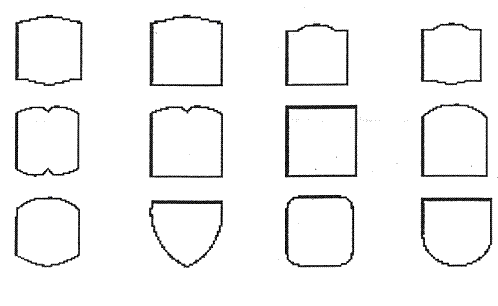
Numerous shapes of signs are historically appropriate, including rectangular, square, shield, oval, circular, and their many stylized variations.
Creative signs called ”effigy signs” (signs shaped like particular objects) can be used where appropriate, such as a camera shape for a camera shop. Effigy signs are encouraged, but should be simple in form and limited in use. Triangular, hexagonal or odd shapes are not historically appropriate and should not be used.
The following shapes are examples of historically appropriate projecting sign shapes:

Composition & Graphics
Information should be clear and direct - composition should be organized by priority as reflected by size, emphasis and positioning of words or images.
Sign graphics should be simple, traditional and appropriate to the business and building style. Strong contrast should be maintained between the sign background and copy (i.e. light on dark, dark on light). Copy should be placed on a solid and neutral rather than a patterned background.
Type Styles
Traditional serif or historically accurate type styles are recommended. The use of more than one type style is discouraged. Ornamental type styles should be restricted to one per sign for headlines only. Emphasis may be given through the use of shadows, bolding, capitals, spacing, colour & contrast, borders and graphic images.
Materials & Texture
Neon tubing may be considered for limited use in windows or on projected signs. Sign texture should compliment the texture of the building. Signs generally, either smooth finish or rough cut wood signs with raised letters are preferred for brick buildings.
Colours
Generally no more than four colour (including black and white) are recommended. Natural earth tones or traditional sign colours such as black, gold or burgundy are preferred. Bright or fluorescent colours should not be used.
Not Recommended
Sign Design: Historically inappropriate designs including fluorescent back-lit signs
Busy or cluttered sign graphics
Ornate or trendy type styles
Bright fluorescent colours
Location: Obscuring the existing architecture
Excessive number of signs
Prohibited: Billboards, scintillating, flashing, animated, and rotating signs
SCHEDULE "J"
DC1 Jasper Avenue Commercial Mixed Use Direct Development Control
This Provision shall apply Lot 54, Block 1, Plan 902 2473, Lots 4A and 5A, Block 2, Plan 226CL, Lots 1-3, Block 2, Plan ND, located at 96 Street, between Jasper Avenue and 101A Avenue, Boyle Street,
To provide for medium rise mixed commercial and residential uses in order to achieve the intent of Section 7.2.6 of this Plan.
Minor Alcohol Sales
Apartment Hotels
Apartment Housing
Bars and Neighbourhood Pubs
Boarding and Lodging Houses
Business Support Services
Child Care Services
Commercial Schools
Community Recreation Services
Convenience Retail Stores
Extended Medical Treatment Facilities
Fascia on premises signs
Freestanding off premises signs
Freestanding on premises signs
General Retail Stores
Government Services
Group Homes
Health Services
Hotels
Indoor Participant Recreation Services
Major Amusement Establishments
Major Home Based Business
Minor Amusement Establishments
Minor Home Based Business
Nightclubs
Non-accessory Parking
Personal Service Shops
bb. Private Clubs
cc. Private Education Services
dd. Public Education Services
ee. Professional, Financial and Office Support Services
ff. Protective and Emergency Services
gg. Public Libraries and Cultural Exhibits
hh. Public Park
ii. Restaurants
jj. Roof on premises signs
kk. Religious Assembly
ll. Specialty Food Services
mm. Spectator Entertainment Establishments
nn. Minor Impact Utility Services
oo. Minor Veterinarian Services
The maximum Floor Area Ratio shall be 3.0 except that, the Development Officer may, at his discretion, increase the Floor Area Ratio to a maximum of 5.0 for comprehensive development on sites of 1 600 m2 or greater which, in his opinion, meets the objectives of the Plan and provides the following:
effective and efficient local traffic management through the provision of a limited number of common parking and service access points to the site;
parking which is below-grade and covered, or parking in a structure above-grade with an exterior which integrates with the overall design and character of the proposed development;
continuity of pedestrian-oriented retail and service establishments with direct access to grade providing activity and interest for passers-by;
Amenity Area, in excess of the requirements of this Provision, particularly those which promote the pedestrian-oriented nature of the development, through the provision of such features as atriums, plazas and seating areas;
Design elements and landscaping features which add to the streetscape and promote the pedestrian-oriented nature of the development, such as:
additional building Setbacks used for sidewalk widening with colonnades, awnings, bus shelters, landscaping and other forms of weather and wind protection within the property line; and
exterior lighting and furniture, mature trees and other planting including means to facilitate natural growth, in excess of the requirements of the Zoning Bylaw.
Lighting and design elements such as openness to public view and a mixture of uses in addition to the expected retail and residential activity, such as restaurants, theatres, cabarets and nightclubs which ensure the attractiveness and safety of the development at night and encourage the active use of the site beyond normal office hours; and
Architectural detailing, exterior finishing materials and building massing which are in harmony throughout the development and with features prevalent in existing adjacent developments where these are consistent with the objectives of this Plan for this Provision;
The maximum total residential density shall be 224 dwellings/ha;
The maximum building Height shall not exceed 20 m nor 6 storeys;
The minimum site area for new development shall be 360 m2;
The first storey of buildings along Jasper Avenue shall not be set back from the front lot line unless a particular design feature is being encouraged that would enhance the overall streetscape;
No minimum Yards shall be required; however, Separation Space shall be provided in accordance with the requirements of the Zoning Bylaw;
Direct vehicular access shall not be permitted to 95 Street, Jasper Avenue, or 101 Avenue;
Parking and loading shall be located, wherever possible, at the rear areas. Required off-street parking shall be provided in accordance with the Zoning Bylaw;
A minimum Amenity Area of 7.5 m2 per Dwelling shall be provided in accordance with the Zoning Bylaw; and
Signs shall be developed in accordance with Schedule 59H.